
The tiny village near Peterborough with a former WW2 RAF base where a Hollywood legend was stationed
The base was used by both the RAF and USAF during the Second World War
Nearly 90 years on from the start of the Second World War, visible reminders of the conflict can still be seen in and around Peterborough.
While Peterborough got off lightly compared to many other cities between 1939 and 1945, it would be wrong to say that the city got through the war unscathed.
In June 1940, a bomb struck a section of Peterborough Lido causing major damage.

Nearly a year later, in May 1941, bombs were dropped on the Priestagate area of the city during the heaviest night of bombing of the entire Blitz.
All corners of the kingdom played a role in the war effort, not least the towns and villages surrounding Peterborough where military bases were built at great haste.
In the early 1940s, with the country gripped by the Second World War, more than 600 locations across the UK were chosen to build new emergency airfields.
Many such airfields were built in the countryside surrounding Peterborough and used by both the Royal Airforce and United States Air Force.

In the years after the Second World War, however, the majority of these airfields were either transferred to civilian use or converted to agricultural land.
How RAF Polebrook played a key role in the Second World War
Located a couple of miles east of Oundle, the small village of Polebrook is today home to just a few hundred people.
These days the village itself features few notable amenities, other than a pub, church and primary school.

But little over 80 years ago, Polebrook was home to one of Northamptonshire’s key strategic airfields in the fight against the Axis Powers.
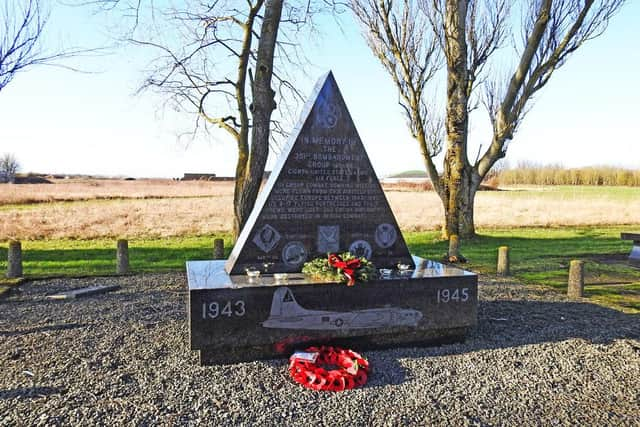
Opened in 1941, RAF Polebrook was the base for the first heavy bomber mission flown by the US Eighth Air Force the following year.
It was in 1943 that none other than world-famous Hollywood actor Clark Gable found himself stationed at Polebrook. Gable was assigned to the USAF’s' 351st Bomb Group to produce and direct a recruitment and gunnery training film, Combat America.
Polebrook’s three runways hosted a number of different wartime aircraft, including the famous B-17 Flying Fortress.
In the three years after the war, Polebrook was returned to the RAF and subsequently closed in 1948.
By 1967, the airfield had been fully returned to the Rothschild estate; its runways broken up and concrete removed.
As of 2026, the former airfield site remains in agricultural use along with the 1940s-era hangar.
Polebrook’s days as a military airfield may be long gone, but its place in history as a key part of the Second World War effort will never be forgotten.