
From paralympic podiums to policy reform: Lord Holmes on inclusion, innovation & the future of tech
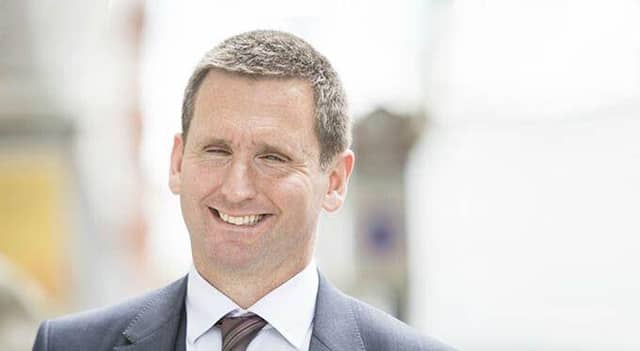

Born in Peterborough, Cambridgeshire, Lord Chris Holmes is one of Britain’s most decorated Paralympic swimmers. His early years in the city laid the foundation for a remarkable career defined by resilience, inclusion and public service.
A nine-time Paralympic gold medallist, he later served as Director of Paralympic Integration for London 2012, helping deliver one of the most successful Games in history. His transition from elite sport to public leadership has been marked by a passion for fairness and accessibility.
Now a member of the House of Lords, Lord Holmes leads key conversations on digital transformation, fintech, ESG, and inclusive design. He is widely recognised as one of the top diversity & inclusion speakers in the UK today.
In this exclusive interview with The Champions Speakers Agency, Lord Holmes discusses the human-led role of technology, how to build inclusive organisations, and why ESG is a vital tool for lasting social and environmental change.
Q: Your early interest in computing began with a ZX Spectrum. How did that early exposure, combined with your own life experiences, shape your view of technology as a tool for inclusion and purpose?
Lord Chris Holmes: “I’ve always had a deep interest in technology and what purpose it can be put to. You’re right—since when I was 12, I got a ZX Spectrum, which ages me, and it will be interesting to see how many people remember the ZX Spectrum.
“It was a great little computer—really good. And we obviously all told our parents we wanted these computers so we could do programming, and we did a little bit of programming, but they were also fabulous, fabulous game machines. But moving from that, when I lost my sight at 14, technology was a key thing that helped me through.
“I didn’t know the term accessible technology or assistive technology, but that’s certainly what I had—a very, very basic laptop with very, very basic speech software on it. So I taught myself to touch type so I could put the information in the usual way, and then that converted what was on screen into speech, and I just wore a little headphone to get that.
“There was nothing miraculous about this technology, and nor did it need to be. Nor does any technology need to be. It needs to be sufficient, purposeful- and enabling. And it was then, and it’s continued to be so.
“When moving into Parliament, I was very interested in setting up a number of groups. I helped to set up the group on artificial intelligence. I set up the group on fintech, as you mentioned—also blockchain. I’m currently a member of the Science and Technology Committee.
“And for me, it’s how you deploy these new technologies—these fabulously powerful new technologies: AI, distributed ledgers and so on. But crucially, how we conceive of them as tools—incredibly powerful, potentially transformational—but tools in our human hands.
“And we have to lead as humans with these new technologies to drive public good, common good—yes, private good as well. But if we get this right, that beautiful connection of humans and technology—human-led technology—could solve so many of the problems that have dogged us as a civilisation for decades.
“And yes, drive growth, yes, drive levelling up, and crucially make a difference to all of us. But it’s potential; it’s not inevitability. I believe we all have to work hard to make as much of an inevitability for the good as we possibly can.”
Q: You describe technology and inclusion as the ‘golden threads’ running through your work. In what ways do you believe they intersect across sectors and institutions?
Lord Chris Holmes: “I think technology and inclusion are the golden threads in the sense that they’re not verticals. And I think all too often, in any environment, people can understandably fall into the trap of thinking technology is just another vertical.
“So, say they’re in a particular part of an organisation, they’ll be well aware that there’s technology, but they’ll see it as a vertical and think that’s for the technology department, that’s for the CTO to be responsible for. But the reality is technology is all of our business—be we parliamentarians, businesspeople, citizens, individuals—it’s all of our business.
“And we need to have much more of a connection to it, much more of a public debate around all of the potential uses, the potential dangers, of course, and the potential benefits of all of these new technologies.
“If we get it right, inclusion is not only the enabler, the empowerer, and the emancipator of individuals, but inclusion is the driver of innovation—the driver of technology. Because these technologies are neutral, really, some people say they’re not, but they are.
“They’re neutral until we lay our human hands upon them, and we need to ensure we lay our human hands upon them for the good. And there you have it running through all those beautiful golden threads: inclusion and innovation, talent and technology.”
Q: Having led digital transitions in both broadcasting and Parliament, what strategies do you believe are essential for guiding organisations through digital transformation in a human-centred way?
Lord Chris Holmes: “I think one of the greatest challenges facing all organisations—private businesses, public institutions, parliaments—is how we transition into the digital space. How we do it effectively, how we manage that transition, and how we ensure that we don’t, if you will, cannibalise or do in the analogue—to describe it as such.
“As deputy chair of a broadcasting organisation, we’re in the midst of a huge digital transition, and it’s absolutely fascinating because, for all organisations, this hasn’t been done before. And it’s really to understand the methodology, the approach—how to deploy the specific technologies.
“Fabulously, though, as ever, it comes back to leadership. It comes back to culture. And crucially, a key part of that is how we drive decision-making in organisations. Yes, to the lowest levels, yes, driving subsidiarity—but crucially, conceiving of decisions as inclusive processes.
“Not a moment in time, but everything that goes into decisions and how they’re made within organisations. I think if we can have decisions as inclusive processes, that is one of the most powerful means of ensuring that we can transition to the digital world—be it in broadcasting, be it in Parliament, be it in financial services—in the most inclusive, effective, economic, social, psychologically positive way.”
Q: You’ve been a vocal advocate for ESG, especially in how it’s implemented beyond surface-level commitments. What does meaningful action on ESG look like to you across different sectors?
Lord Chris Holmes: “ESG is such a technical area in many ways. It’s a critical area. It’s much talked about—far more talked about than delivered upon. For me, it’s critical that it’s understood in terms of E, S and G. All too often, understandably, the E—the environmental—is understood and focused upon. And, of course, it’s absolutely critical. But the social and the governance—are just as important.
“I saw this when we ran the Mission 2012 programme in sport. We did this because, in 1996, Britain came 36th at the Olympic Games—one gold medal. Through Mission 2012, by taking a system-wide approach and looking at all of these factors, we took 36th place in 1996. We took the team to third place in London 2012. We took them to second place in Rio 2016.
“Similarly, in other contexts—with financial services organisations, with pharmaceuticals and other organisations I’ve worked with and spoken for—really looking at the environmental, the social, and the governance together, and how these become threaded not just through the organisation but how we use the power to drive this through the supply chain, connecting B2B, connecting to customers, how we’re constantly amplifying the effect that we can have here. And for me, it comes down to this: ESG—existential, seismic, global.”
This exclusive interview with Lord Chris Holmes was conducted by Chris Tompkins of The Motivational Speakers Agency.