
EXPLAINED: What will happen to the 37 skeletons that were found beneath the Queensgate Roundabout?
Tombs and burial chambers have also been found
Peterborough’s City Link project is facing a two-month delay after more than three dozen skeletons were found during excavation works.
After seven skeletons were initially found at the end of July, that number has now multiplied with Peterborough City Council yesterday (Wednesday, August 26) confirming that a total of 37 burials have been unearthed.
It’s believed that the remains date from a cemetery which existed on the Queensgate Roundabout site during the Medieval period and later developed in the Victorian period.
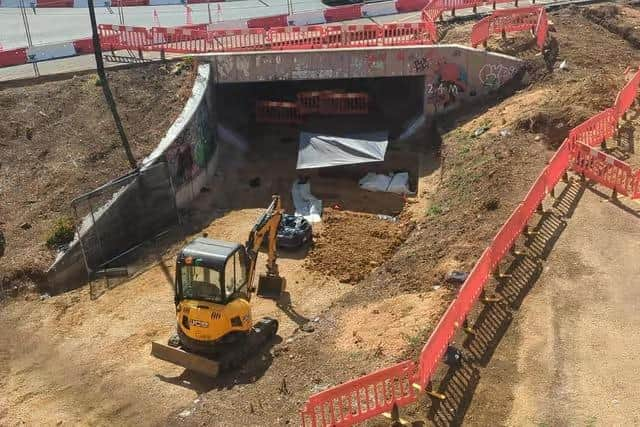

It was initially thought that remains from this cemetery were cleared when subways were built at the roundabout during the 1970s.
The Council has obtained an archaeological licence and appointed an archaeologist to ensure the skeletons are reburied in line with national guidelines.
Councillor Angus Ellis, cabinet member for transport at Peterborough City Council, said: "Work is currently continuing at the site, with staff from M Group working alongside Oxford Archaeology following the discovery of human skeletal remains.
“Archaeologists have now discovered 37 skeletons along with tombs and burial chambers.
“Due to this, we anticipate that the programme could now be delayed by up to eight weeks potentially. “This is due to the nature of the work that the archaeologists are undertaking, which is intricate and time-consuming. We are looking at options to reduce this possible delay in later phases of the project and will announce updates in due course.” What will happen to the skeletons now? Over the coming weeks, archaeologists will work to determine whether any other skeletons lie beneath the Queensgate construction site.
Once this work is completed, each of the skeletons will be reinterred at a Church of England burial ground elsewhere in the city.
According to the Peterborough Civic History Society, the first person buried at the site was Elizabeth Money in March 1805.
Like many cemeteries of the Georgian and Victorian eras, the Parish Burial Ground suffered at the hands of grave robbers.
In a time of advances in medicine and surgery, the demand for human bodies for dissection was high.
With medical schools constantly in need of bodies, grave robbers would steal freshly-buried corpses to sell on.