
Westminster Life: Taking better care of online safety
The risks of social media and online safety are issues that are increasingly being raised with me by constituents, writes Peterborough MP Andrew Pakes.
From online bullying to mental health, digital safety is an important discussion.
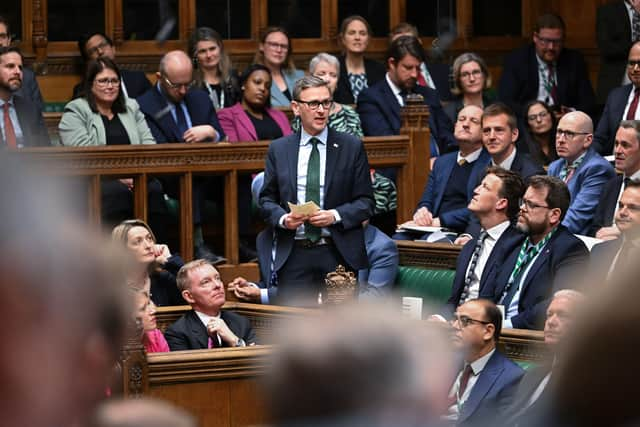

One of the big messages I hear from parents and schools is about the imbalance in responsibility. Too often the online world feels like a runaway train, with families and teachers left to pick up the pieces while the big tech companies set the rules. This week the Prime Minister signalled further action to help redraw that balance.
The Online Safety Act, passed in 2023, already puts legal duties on platforms to protect children from harmful and illegal content, with Ofcom now enforcing new “protection of children” codes and age checks on pornography and other risky sites. From this summer, major sites will have to filter out harmful material for under‑18s and prove they have robust age verification in place or face new severe penalties. But technology has moved on quickly, particularly with AI and ever more addictive design, and the law still needs to go further if it is to keep up.
I welcome this week’s new announcements, having raised online safety with Ministers on several occasions. The new plan will close loopholes that allow AI tools and chatbots to generate or surface illegal content, including deepfake sexual images of children, sending a clear signal that no platform or technology gets a “free pass” on child safety.
It will also give the government the power to act at speed once we have the results from a new three‑month consultation on children’s digital wellbeing, so we are not waiting years for fresh legislation every time a new feature or app appears. That consultation will look at measures such as clear minimum age limits for social media, curbs on endless scroll and autoplay, stopping children sending or receiving nude images, and limiting youngsters’ ability to use VPNs and risky chatbots to dodge safety protections.
The Government is also looking closely at international examples, like the Australian model where action is underway to tilt the balance back towards children’s wellbeing and parental control. We should be just as ambitious here, so that Britain is a leader, not a follower, in keeping children safe online.
What does all this mean for Peterborough? Teachers tell me about pupils being exposed to bullying and misogyny. Youth workers speak about the impact on confidence and mental health, while the police are dealing with online grooming and the sharing of explicit images among teenagers. Stronger national rules matter because they back up the work happening in our schools, families and community groups, and give frontline services more leverage with the global companies whose products shape so much of children’s lives.
In Parliament, I will be looking closely at the detail of these new powers. I want to see clear, enforceable duties on tech companies, transparent reporting on what they are doing to cut harm, and proper support for schools and parents here in our city to help children build healthy digital habits. This cannot just be a conversation in Westminster or in Silicon Valley boardrooms; it must be shaped by the real‑world experiences of families in places like Peterborough.