
Flying Ant Day UK: Moment ants take flight in Peterborough garden - Where do ants nest? Do flying ants bite?
A video shows dozens of flying ants in a Peterborough garden - Flying Ant Day UK explained in full.
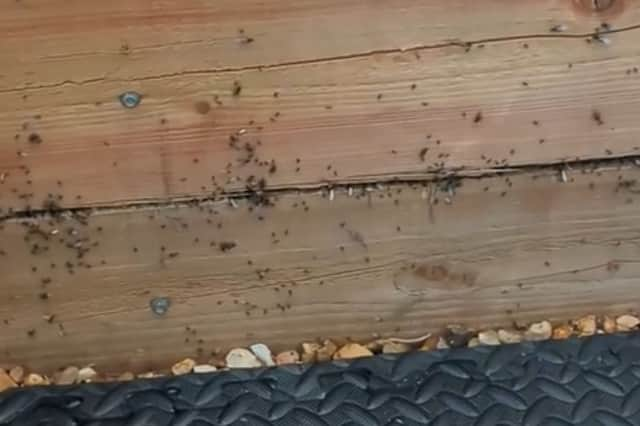
Footage dozens of flying ants in a Peterborough garden.
Posting to social media on July 10, resident Jennifer Mason said she had waited all week for the weather to be warm enough to sit in her pool, but when she went out into her garden she was met with a swarm of flying ants.
Here’s all you need to know on Flying Ant Day, including why flying ants suddenly appear and if they’re harmful.
Why do ants fly?
According to the Natural History Museum, an ant colony can only get so big, before a new queen will need to strike out on her own to begin a new colony. She needs to meet and mate with a male from a different colony and find a new area in which to start building a nest. Growing wings and flying enables her to do this.
Why do flying ants swarm?
One reason flying ants emerge in larger numbers is because it gives them protection from predators. Another reason flying ants swarm is to increase their chance of reproduction, with more of their species around, the ants shouldn’t have far to look for a mate.

Where do ants nest?
Before swarming, ants live in a colony in a nest. Black garden ants nest in dry soil, with them often found in flower beds and lawns, and under paving slabs or stones. The Natural History Museum says, in the few weeks before swarming, you may notice heaps of soil appearing above the nests.
How harmful are flying ants? Do flying ants bite?
According to National Geographic, flying ants are harmless.
Red ants do have a stinger, and can also bite with their mandibles. However 90% of flying ants in the UK are black ants, which don’t have a stinger and can’t bite through human skin.
When is Flying Ant Day? Why do flying ants suddenly appear?
There is no specific 'Flying Ant Day', but scientists have found that ants are capable of short term weather prediction and chose a warm day to travel. This is why flying ants can suddenly appear when temperatures are high.
The swarming event usually takes place in mid to late summer, coinciding with a period of humid weather.