
Peterborough man just one of 64 people in world to be diagnosed with genetic disorder known as GNB1

A Peterborough man is one of just 64 people in the entire world to have been diagnosed with a rare genetic disorder.
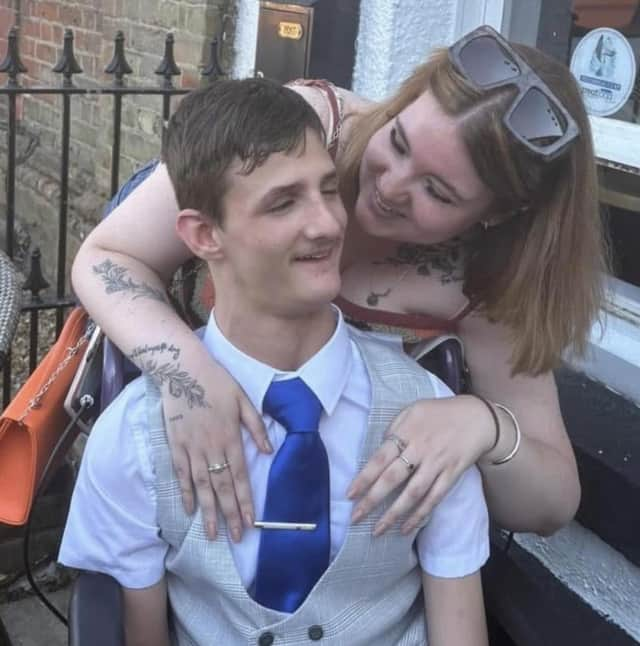
George McCulloch (20) of Whittlesey, was confirmed to have the genetic disorder known as GNB1 six years ago after many years spent undergoing examinations, tests and analysis by medics at a number of hospitals.
Now, with this April confirmed as the first ever GNB1 awareness month, George’s sister Maisy is undertaking a 14 kilometre walk to help highlight the disorder, her brother’s plight and the issues it raises.
Maisy said: “It took years for us to get a proper diagnosis for George.

"So many people were involved over such a long time and we had to make visits to lots of different hospitals.
"There were times when we thought we’d never get a diagnosis of what was really wrong with George.
“He was on a genetic testing pathway at Addenbrooke's Hospital in Cambridge, which is the hospital that diagnosed him.
She said: “GNB1 is an extremely rare condition and we’re told just 64 people in the world have it.”
But its rarity means very few people – including medics – are even aware it exists.
Maisy is planning to do her 14 kilometre walk on May 22 in a bid to raise public awareness of GNB1.
She said: “I’ll be doing the walk around the Green Wheel in Whittlesey.
"We have also set up a Gofundme page to raise some money to help research into GNB1.
The Gofundpage can be found here and the amount raised so far is £465.
GNB1, which stands for Guanine Nucleotide-Binding Protein Subunit Beta 1, is a neurological development and brings a range of challenges, including developmental delays, communication differences and complex medical needs.
For George it means he is unable to complete any tasks independently and relies on his family – mum, Maxine and her partner Mark as well as Maisy for full support.
George, who during the week attends LINC in Ely, a school for 18 to 25-year-olds with disabilities, is non-verbal and has many challenges that are believed to fall under GNB1.
Maisy said: “We were told George would never walk, however against all odds he began walking around our home when he feels like it.
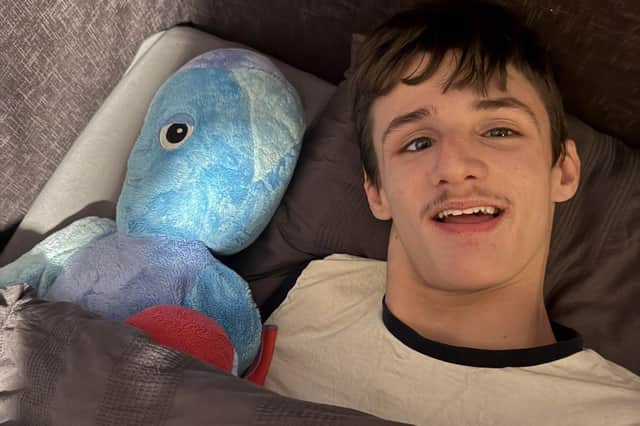
"He relies heavily on routine due to not being able to voice his needs as well as for comfort, and has a mental age of a toddler, so enjoys watching cartoons, sensory play, and music.
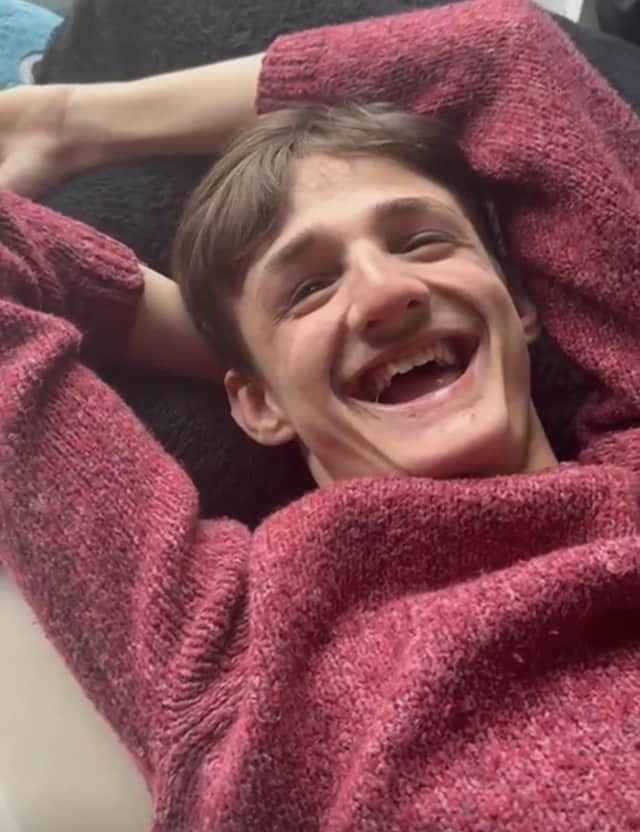
"But George is an extremely happy, loving, cheeky and outgoing person, with the biggest personality who is so determined and has so much strength.
Maisy added: “George is now 20 and was diagnosed at 14, which is why I will be walking 14 kilometres to raise money to go to the GNB1 charity so they can keep researching.
“George and friends will join me for the final 5 kilometres.
"Any support is hugely appreciated and any donations made will be going to GNB1 advocacy group.
And she said: "Wherever I go in life and whatever I do, I know I will have George beside me.
"It is extremely rewarding and there is no greater title than his sister.”
Stephanie Normand, president of the GNB1 Advocacy Group, said: “We are fortunate to have a vibrant, active community worldwide who has come together to increase awareness of GNB1, culminating in this first-ever GNB1 Awareness Month, during which we are celebrating the 10 year anniversary of the first published research paper identifying GNB1 encephalopathy.
"These 10 years of research have brought us to the point that we are ready to move from theory into action.
"But we need help funding the final development of these treatments.
"As parents of kids with significant medical needs, most of our money goes to therapies that help keep them functioning- leaving little left over to contribute to the millions it will take to fund patient trials.
"If we can raise awareness, our hope is that we can get in front of people with a kind heart and money to invest who can make a real difference in the lives of our loved ones.”