
Peterborough 5-year-old diagnosed with leukaemia weeks after starting school now fronts national campaign
A Peterborough mother who feared she was being an "overprotective parent" after noticing bruises on her daughter was devastated to learn the five-year-old had leukaemia just seven weeks after starting school.
Nina Hinds was diagnosed with acute lymphoblastic leukaemia, cancer of the white blood cells, in October 2025 after her mum Sam raised concerns about persistent bruising, tiredness and a loss of energy.
Following a long journey she is now on the road to recovery and is in “maintenance” chemotherapy treatment until December 2027.
Now, Nina is helping Cancer Research UK raise awareness of childhood cancer by fronting a nationwide campaign to mark Childhood Cancer Awareness Month.

Nina features in a poster which will be displayed in hundreds of the charity's shops this September.
Cancer Research UK is encouraging people to support life-saving research by donating or picking up a gold ribbon badge, the symbol of childhood cancer awareness, from its shops.
The awareness drive highlights a stark reality: Around 4,200 children and young people are diagnosed with cancer each year in the UK*.
Her mum Sam first became concerned when large bruises began appearing on Nina's legs, arms and forehead shortly after she started school last September, but initially put them down to normal childhood knocks and bumps but after developing an ear infection, Nina became unusually tired and pale.
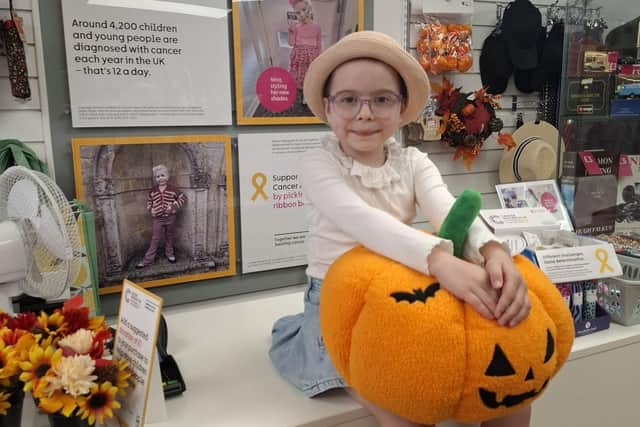
Mum Sam said: “She just didn't seem as full of life as she usually is. I couldn't work out what was wrong with her. I was searching her symptoms and leukaemia kept coming up. But I thought, 'this doesn't happen to us, this is what happens to other people'.
“I thought maybe I was being an overprotective parent and a bit dramatic about it all.”
After Nina's teacher raised concerns that she had fallen asleep in class and was not herself, Sam alerted her GP.
Within minutes, a doctor called back and urged the family to come in immediately. Blood tests later that evening revealed Nina's bone marrow was not working properly and she was subsequently diagnosed with B-cell acute lymphoblastic leukaemia.
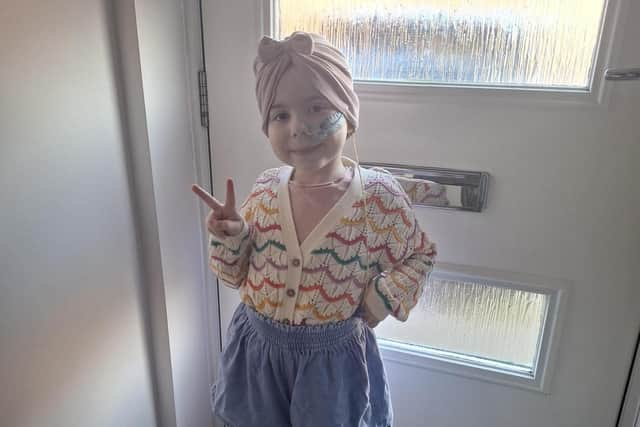
“You'd think when you get told your child has cancer you would just burst into tears,” Sam said. “But it was such a shock I didn't cry at all. Daniel was the opposite, he fell to the floor.”
Nina was referred to Addenbrooke’s Hospital in Cambridge where she is now taking part in the ALLTogether-1 trial, supported by Cancer Research UK, which is investigating how to improve survival for young patients with ALL and reduce the risk of long-term side effects.
“We thought it was really important to take part,” Sam said. “We felt that if we were able to help children in the future by doing these trials, it was very important, because if other children in the past hadn’t taken part in trials, then Nina wouldn’t be on such a good treatment plan.”
Treatment began on October 20 2025, Nina's fifth birthday, and included eight months of intense treatment. She is now in “maintenance” chemotherapy treatment until December 2027.
Despite the challenges, Nina's family say she never lost her sense of humour.
“It was meant to be her birthday party that weekend and she was sad we had to cancel it,” Sam said. “The nurses sang happy birthday to her and she replied: 'Do I look happy?'”
A turning point came when Nina started receiving a new type of treatment that helps the body's immune system target and destroy leukaemia cells.
“By Christmas Day she was dancing in the front room,” Sam said. “That treatment really changed things.”
Although she has faced restrictions on school, holidays and social activities, Sam says Nina has shown remarkable resilience.
“She's a really confident little girl and she's just got on with it,” she said.
“She's made friends at school and in hospital and will happily talk to people about her leukaemia.
“Now we just want Nina to complete her treatment with as few complications as possible and go on to live her life like any other child. No relapse, no more chemo.”
Cancer Research UK is the biggest charitable funder of research into children’s and young people’s cancers in the UK and has helped to more than double children’s cancer survival in the UK since the 1970s**.
Currently, most children and young people with cancer are treated with drugs that were originally developed for adults. Only seven medicines were specifically approved for childhood cancers between 2007 and 2022, compared to 150 for adult cancers.
While current treatments save lives, they leave many children and young people with life-long side effects, including things like hearing loss, heart problems, infertility and a higher chance of developing another cancer.
Cancer Research UK has led many transformative clinical trials into children’s cancers. These trials have led to better treatments that have helped more children and young people with cancer live longer, better lives.
The charity has also funded pioneering research into understanding different types of childhood leukaemia which have made treatment better for children today.
Cancer Research UK has played a role in around half of the world’s cancer drugs considered essential for children.
Cancer Research UK spokesperson for the East of England, Jose Ramos, said: “We’re grateful to Nina’s family for sharing their experience. Cancer is different in children and young people – from the types of cancers that affect this age group, to the long-term effects of treatment. So, it needs a different and dedicated approach.
“Thanks to our supporters, we’re driving discoveries, developing new drugs and transforming clinical trials to help accelerate a new generation of more effective and less toxic treatments.
“That’s why we’re urging people across Cambridgeshire to get behind our scientists’ efforts to ensure more children and young people like Nina live longer, better lives free from the fear of cancer.”
Pick up a gold ribbon pin badge in Cancer Research UK shops or donate at cruk.org/childrenandyoungpeople.