
Meet the man making one of Peterborough's busiest riverside paths safe for everyone
The footpath that runs alongside the River Nene in Peterborough is not always the most pleasant place to be.
The path leads from Rivergate and Charters to Railworld and beyond – and is a crucial route for pedestrians and cyclists going to and from the city centre.
But often you are left dodging overgrown weeds, litter – and worse – while walls and other items have been covered in graffiti and vandalism.
For community champion and volunteer Mark Fishpool, this simply wasn’t good enough, and the 70-year-old has spent three weeks working on the path to make it a nicer, safer place to walk and cycle down.
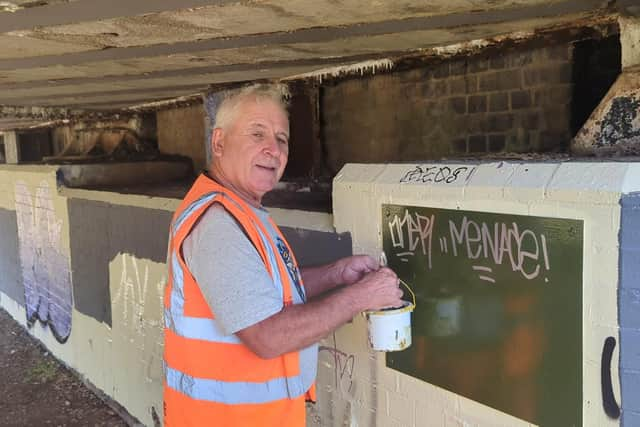

He said: “I had a meeting with some of the volunteers from Railworld, and we had a walk down from Charters all the way to Railworld. I pointed out the whole footpath needed restoration and enhancement. All the undergrowth had been allowed to grow rampant – the footpath had decreased in size by about 50 per cent because of all the detritus laying on the path. There was a lot of small fly tips and litter in the undergrowth. So three weeks ago I decided some action needed to be taken, and I came down here and started work.”
Mark has done much of the work by himself – with a small team of volunteers joining him on some days – but now the work is nearing an end, and the paths look much clearer.
He said: “It has been a long slog, but I have finally got to the end of the tunnel.”
No corner of the path has been ignored – from the railings on the footbridge from Asda getting a lick of paint, huge piles of foliage removed and graffiti painted over.
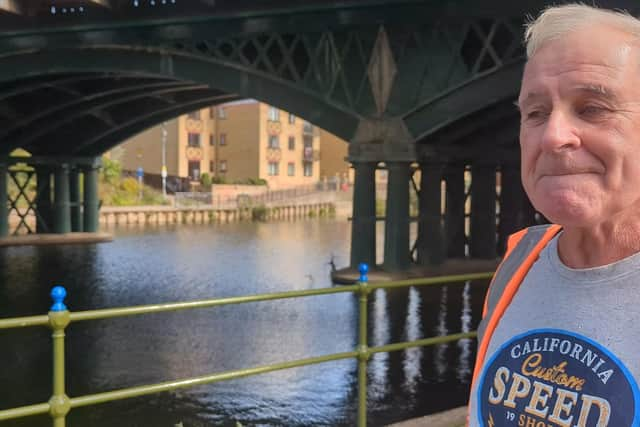
Mark said: “Removal of the foliage is important. It has opened the path right up, and people can now see round the corners – pedestrians can see cyclists, cyclists can see pedestrians. Accidents don’t occur, people feel much safer. Visually it has improved 100 per cent.”
Mark said he believed no extensive work to tidy the path had been carried out for many, many years.
He said: “When you are cutting the undergrowth back, you find all kinds of rubbish – you find drug needles, you have to be careful with those, tin cans, bottles – all sorts. Now people can get to the bins earlier. “We will leave some undergrowth – wildlife needs somewhere to live, and with the rubbish gone, it can thrive once more.”
During his work, Mark said plenty of passers by had praised him. He said: “When I first started down here I was surprised by the amount of people using it – of all age groups. I’ve had a very positive reaction from everybody. They have noticed the change, and have stopped and thanked me.
"Now we need to put a preventative maintenance scheme in so that it isn’t allowed to return to the state I found it in three weeks ago again.”