
Leading councillors to decide today on possible postponement of Peterborough's May local elections

A group of councillors will today (January 12) decide whether to urge the Government to postpone the city’s local elections that are due to take place in May.
An extraordinary meeting of Peterborough City Council’s ruling Cabinet will meet to discuss dropping the elections to save money and allow them to release essential capacity to deliver local government reorganisation.
Eighteen Peterborough councillors are due to seek re-election in five months.
The proposal is for the May 2026 elections to be postponed for a year with the elections in 2027 being to the newly formed local authority which will go ‘live’ in April 2028. However, the existing city council will remain in existence until April 2028.
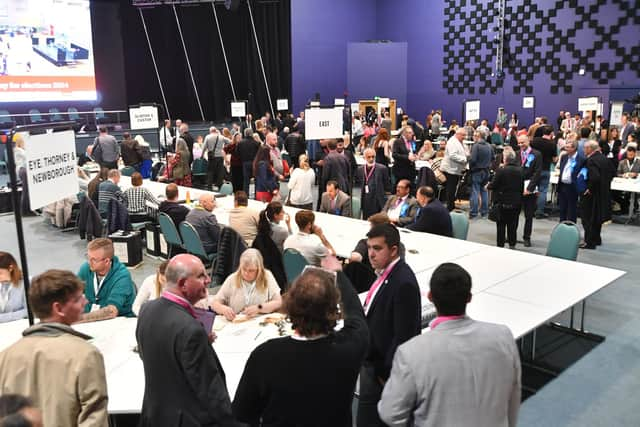

Any move to postpone the local elections is likely to be opposed by the council’s Conservative group, which is seeking a poll of all the views of all councillors on the issue.
Today’s extraordinary cabinet meeting is taking place after Minister of State for Local Government and Homelessness, Alison McGovern MP, wrote to council leader, Councillor Shabina Qayyum, on December 18, inviting her to set out the council’s views on the potential for the postponement of the local elections in May for one year.
Another 63 councils which are also going through the process of Local Government Reorganisation and have elections scheduled in May also received the Government letter.
The council has until midnight on January 15 to respond to the letter and set out its views on the postponement of local elections until May 2027.
The Secretary of State will then decide whether to make an order to postpone elections for one year for those councils who raise capacity concerns. Town and Parish council elections would continue as normal.
Cllr Qayyum said: “Elections are an essential part of the democratic process as they give residents a direct voice in shaping decisions that are made.
“It is for that reason that the Cabinet will not take lightly the question we have been asked to consider by Government.
“At the meeting we must weigh up our desire, and that of many councillors and residents, to see the election cycle proceed as planned, with an awareness of the cost of running such elections when all out elections will follow a year later for a new council or councils, and the time that is involved for council officers in running the elections when they are already being asked to manage a complex local government reorganisation programme which must be delivered in just over two years.
“I am grateful to officers for presenting the facts in the report to Cabinet, which residents can also read on the council’s website.
"We have sought the views of other members and today a decision will be made on the council's response.
“We must also remember that it is ultimately the Secretary of State’s decision on whether the elections in May proceed as planned or not.”
A report by officers to the cabinet asks members to decide whether the response to the Government should indicate a preference for a postponement of the elections, or for them to take place as planned.
What issues will councillors consider?
Councillors will be told the cost of the May 2026 elections will be £303,000 with members serving for two years.
They will also consider the amount of time council officers will spend managing the election process while at the same time as implementing a complex local government reorganisation programme.
The report states: “Running an election requires staff from many areas of the council to be involved, from supporting the postal vote process to managing polling stations and the count.
It adds there is a need ‘to ensure a smooth transfer from existing council arrangements to a new system of councils by April 2028.’
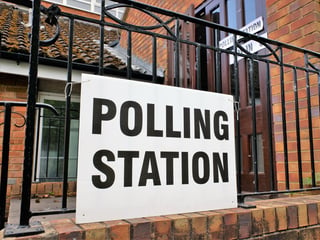
The report also warns: “Elections should not be delayed lightly and adhering to scheduled elections is crucial for upholding democratic principles.
"That postponing elections could attract significant public dissatisfaction, particularly given the shift in the national political picture since those members were last elected.”
A number of Cambridgeshire councils have already made a decision with Huntingdonshire, South Cambridgeshire and Cambridge asking for no delays to the May 2026 local elections.
The balance of power at Peterborough City Council:
The Labour group is the largest with 17 seats and it administers the local authority with support from members of some of the other political groups.
The other parties have a total of 43 seats.
They are Peterborough First (13 seats) Conservative (11) Liberal Democrats (8) Greens (5) Independent (6)
Membership of the council’s ruling cabinet includes:
Labour Cllr Shabina Qayyum, leader of the council.
Labour Councillor Zameer Ali.
Labour Cllr Katy Cole.
Labour Cllr Angus Ellis.
Labour Cllr Mohammed Jamil.
Peterborough First Cllr Mohammed Farooq, deputy leader.
Peterborough First Cllr Neil Boyce.
Liberal Democrat Group, Cllr Christian Hogg.
The Peterborough councillors who face election in 2026:
Scott Warren (Cons) – Bretton
Alison Jones (Lab) – Central
Dennis Jones (Ind) – Dogsthorpe
Samantha Hemraj (Lab) – East
Rylan Ray (Not specified) – Eye, Thorney and Newborough
Christian Hogg (Lib Dem) – Fletton and Stanground
Alan Dowson (Lab) – Fletton and Woodston
Andrew Bond (Lib Dem) – Gunthorpe
Marco Cereste (Cons) – Hampton Vale
Mohammed Farooq (PFirst) – Hargate and Hempsted
Noreen Bi (Lab) – North
Michael Perkins (Cons) – Orton Longueville
Julie Stevenson (Ind) – Orton Waterville
Muhammad Sabir (Lab) – Park
Asif Shaheed (Lib Dem) – Paston and Walton
Mohammed Rangzeb (Green) – Ravensthorpe
Ray Bisby (PFirst) – Stanground South
Sarah Hillier (PFirst) – Werrington