
Chairman sets out vision for ‘once in a generation’ £20m plan for Peterborough neighbourhood
Last year, the government selected Peterborough to receive up to £40 million of Pride in Place funding to support regeneration in the city.
Half of this money will go towards Paston, Gunthorpe and Welland while the other half will go towards Orton Malborne and Orton Goldhay.
The funding gives these two communities control of up to £2 million every year for the next 10 years.
Neighbourhood boards have been established for both communities in order to ensure that the projects are locally led and demonstrate transparent, inclusive and accountable decision making.
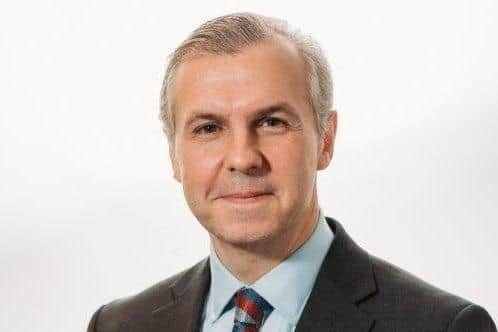

The Local Democracy Reporting Service sat down with Jonathan Jelley MBE JP, chairman of the Paston, Gunthorpe and Welland Pride in Place Neighbourhood Board, to discuss his vision for the funding.
What is Pride in Place and what do you hope it will achieve for Paston, Gunthorpe and Welland?
“It’s a 10-year opportunity to give the residents of Paston, Gunthorpe and Welland, the investment, voice, and confidence to create the future they want for themselves.
“And the difference here is that this is the complete inverse way of working that is normal and has been normal for a long time, by which I mean, this is absolutely not a top-down approach.
“This starts the other way around. It starts in the community, in the roots of the community, and works up to the outputs from the communities.”
How significant is this opportunity for these communities?
“It is, I would say, a once in a generation opportunity for these type of communities who feel they’ve been forgotten, frankly, for quite a long time.
“And we see the effects of that now when we walk around and talk to people and that’s emerging more and more in the work that we’re doing.
“People absolutely feel forgotten, and that is terrible and unacceptable, and that is why it was so fantastic and wonderful that these areas, albeit sad, they need this type of programme.
“But it’s wonderful there is an opportunity for the residents themselves to shape the futures and the places where they live.”
What are the biggest challenges facing Paston, Gunthorpe and Welland?
“We are quite early yet. This is a 10-year programme. So it’s probably too early to draw significant conclusions from the work that we’ve already done.
“But what I think is emerging, there are some themes, if you like, and what people want is safer, cleaner, and better maintained neighbourhoods.
“Better access and connectivity, good green up kept public spaces, more opportunities for children and young people, stronger community facilities.
“And a greater sense of connection and pride. I think what we need to do is to be careful not to jump straight away from themes to solutions.
“We need at some point to go back from this early dialogue and check back with the residents that we’ve heard correctly and that we’ve got the right ideas before we start pinning investments to those things.”
In 10 years’ time, what would you like residents to be able to point at and say “That’s what Pride in Place has done for us”?
“This is all about people’s feeling about where they live in their environment.
“So for the people living in these areas in 10 years’ time, my board members and our MP, and our council officers, all want these residents to be proud of the places that they live and feel crucially they have a stake in them.
“What we’ve got to do here is we’ve got to have a sustainable programme. We must not see this £20 million as the panacea to everything. It’s not.
“There’s a lot of work to do, but what we have to ensure is that this is a sustainable programme that actually goes beyond 10 years.
“I know 10 years is a long time, and I won’t be the chair fortunately for everybody in 10 years’ time, but we absolutely need to make sure that the actions we take in this period have longevity.”
How will you balance what residents want immediately with projects that might take years to deliver?
“Let’s be honest. There is a massive distrust from the public, generally, in institutions, in governments, in councils, in people in authority, we all know it.
“So any funding that comes from the government, there’s a natural, perhaps healthy scepticism around that.
“And one of our key jobs is to try to mitigate that. And the only way you mitigate it, is to listen to people, understand the priorities, identify some short term quick wins that we could actually do something about very quickly.
“And then guess what? When we deliver the park bench, when we clean up an area, when we do the things that people want that we can do quickly, they begin to believe something might be different this time.
“And if you get that buy in early on, you’re more likely to have it in the future. So I think it’s balancing. It’s always a question of balance.
“It’s a long term project, but to get the long term aim delivered, you’ve got to focus on the short term as well. Tricky, but that’s what we have to do.”
How will you ensure residents’ voices and opinions are not drowned out during the process?
“Community engagement is hard. If you go out and say you’re going to start engaging with the community, guess who’s going to speak first and the loudest? The people that always do.
“And that’s not to diminish the view of people that speak up in the communities. Now, that’s important, but this is about the deepest possible roots of these communities.
“So how do we reach them? Because these people do not naturally engage with surveys, with engagement, of listening.
“It’s not a natural thing because I think a lot of them probably have given up because they’re not being listened to.
“So this is about us being in the deepest roots of those communities using all networks and channels available to reach as many people as we can.
“We’ve got a government set target, a minimum of reaching 10 per cent by the end of November.
“Now, in my area, Paston, Gunthorpe, and Welland, there’s something like 12,500 residents. So if you do the maths, we need to reach 1,200 people who have to have engaged with our programme.
“If we don’t achieve that minimum level, then we’ve got a problem straight away. We’re making very good progress towards that, and I’m very confident we will not only meet that, we will excel it.”
What is the one thing you most want the residents of Paston, Gunthorpe and Welland to understand about Pride in Place?
“I really passionately want the residents of these areas to believe and feel, and I know it will take time, that this is their programme. That this is their money and that this is their time.
“One of my board members is a resident, and he said to me, I’ve complained about so many things. I was one of those guys, if I went to the pub with you, you know, a year ago, two years ago, I would have been moaning the whole time about everything, thinking there’s no hope.
“He stepped forward. In this case, to be one of my board members. So he’s now turned that around to being a fantastic, proactive resident leading the decisions that we’re making about shaping this investment.
“And that excites me. It’s what I want to see more of. I want more engaged. It doesn’t mean you have to be a board member. There’s lots of ways you can engage with this programme.
“But I think that’s what people need to feel, but they need help to feel it. It won’t just happen because we say it. We need to prove it.”