
Seven human skeletons found in Queensgate Roundabout works
Seven human skeletons have been found by workers carrying out the Queensgate Roundabout works.
The discovery might not be too much of a surprise, given the roundabout was built on a 19th century parish graveyard – but the news means work on the roundabout could be delayed by a month.
Councillor Angus Ellis, cabinet member for transport at Peterborough City Council, said: “We can confirm that a total of seven human skeletons have been found on land within the Queensgate roundabout, which is currently being developed as part of the City Link project.
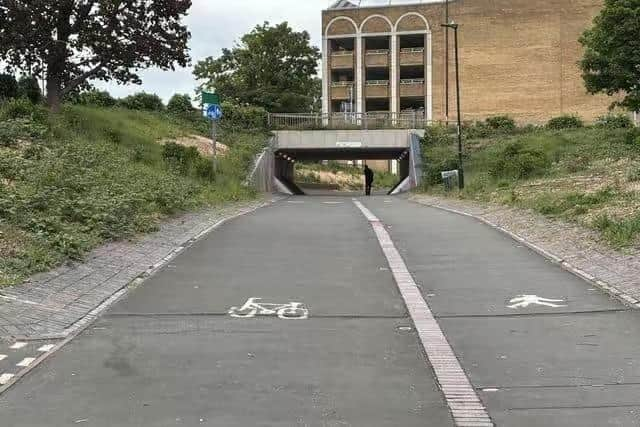

“Following an initial discovery of a human skeleton, the council contacted an archaeologist who attended the site and has since discovered a further six skeletons. We believe that these remains date from a cemetery which existed on this site during the Mediaeval period and later developed in the Victorian period. The cemetery was then believed to be closed to new burials in 1858. It was thought that remains from this cemetery were cleared when subways were built at the roundabout during the 1970s.
“Following these discoveries, the council must obtain an archaeological licence to continue work at the site. We are currently in the process of obtaining this licence and are working with an archaeologist at the site. As a result, we are forecasting that the CityLink works may be delayed by four weeks, however we are looking at options to reduce this delay in later phases of the project. We will announce updates in due course.”
The Parish Burial Ground
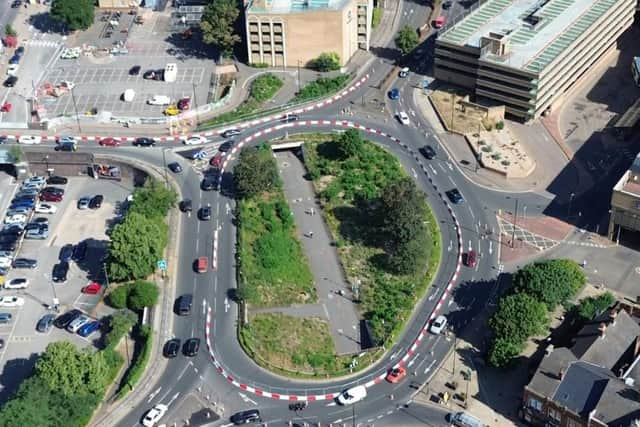
In use between 1805 and 1858, the Parish Burial Ground was located on a three-acre site at the bottom of Cowgate, covering the present-day Queensgate Roundabout.
The burial ground was opened in the early 19th century due to the lay-persons cemetery on the north side of the Cathedral becoming overcrowded.
According to the Peterborough Civic History Society, the first person buried at the site was Elizabeth Money in March 1805.
Like many cemeteries of the Georgian and Victorian eras, the Parish Burial Ground suffered at the hands of grave robbers.
In a time of advances in medicine and surgery, the demand for human bodies for dissection was high.
With medical schools constantly in need of bodies, grave robbers would steal freshly-buried corpses to sell on.
The worst years for body-snatching at the Parish Burial Ground were between 1827 and 1830. As a result, the walls around the burial ground were replaced with iron railings.
The Parish Burial Ground stopped accepting new burials in the late 1850s, but remained open for members of the public to tend to graves.
The site remained largely unchanged for the subsequent four decades, before a number of gravestones were removed in 1911 for a road redevelopment.
By the late 1970s, all visible signs of the burial ground had been removed to allow for the Queensgate Shopping Centre redevelopment.
While the burial ground itself may have been lost, a blue plaque at the end of Cowgate marks the spot where the cemetery once stood.