
‘Frozen in time’ village near Peterborough that had a medieval castle - it’s barely changed in centuries

The village can be traced back to the time of the Domesday book
Mid-November is usually the time of year when many of us start ramping up our Christmas preparations and things get a bit hectic.
For some, the lead up to Christmas is even better than the day itself, with a good few weeks of light switch-ons, markets and suchlike.
But it’s fair to say that the pre-Christmas madness can sometimes get a bit overwhelming, particularly if you find yourself battling the crowds in Peterborough city centre.
For this very reason it’s important to keep on top of our mental and physical wellbeing and not allow the festive craziness to lead to burn-out.
A great way to do this is to swap the hustle and bustle of city life for one of the chocolate-box villages surrounding Peterborough in the lead-up to Christmas.
If your visit happens to fall on a crisp winter day, you’ll be treated to some truly Christmassy scenes.
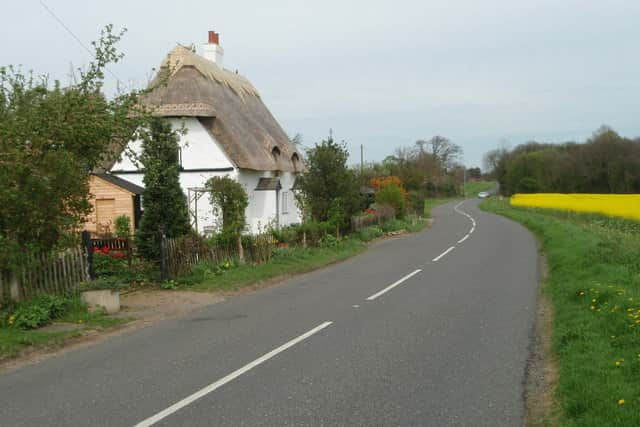

There are literally dozens of beautiful villages to choose from this festive season, but we think one stands out from the crowd if you’re after peace and quiet.
Washingley and its medieval castle
Tucked away in the peaceful Cambridgeshire countryside, just a short distance from Peterborough and the A1, lies the tiny historic settlement of Washingley.
It might be easy to drive past without giving it a second thought, but this quiet corner of Huntingdonshire has a surprisingly rich history, including the remains of a medieval castle, a deserted village and the site of a once-impressive country estate.
With its rural surroundings, fascinating heritage and peaceful lanes, Washingley is an interesting destination for anyone looking to discover somewhere a little different in the run-up to Christmas.
Washingley's history stretches back much further than its present-day appearance might suggest. The settlement was recorded in the Domesday Book of 1086, where it appeared under the name Wasingelei.
Perhaps the most intriguing part of Washingley's history is its medieval castle.
Although little remains visible today, Washingley once had a motte-and-bailey castle, a type of fortification introduced to England by the Normans following their invasion in 1066.
Motte-and-bailey castles typically consisted of a raised earth mound, known as a motte, topped by a wooden or stone defensive structure.
Alongside it was an enclosed courtyard, or bailey, which could contain accommodation, storage buildings and other facilities.
These castles were not simply military strongholds, but also powerful symbols of authority, demonstrating the status and influence of the landowner.
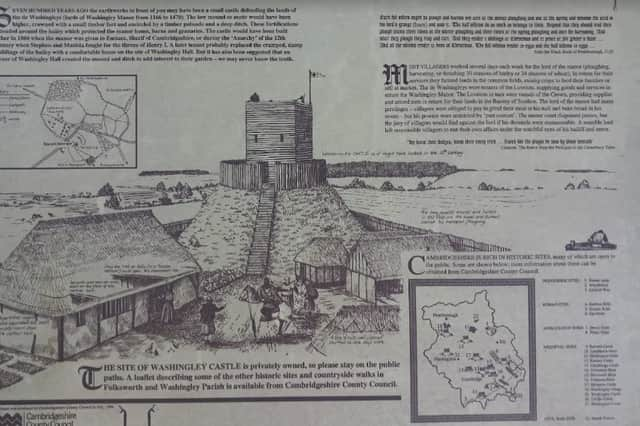
At Washingley, the castle is believed to have been associated with the de Washingley family, who held the manor between 1166 and 1470.
The earthworks formed part of the historic landscape that later developed into the Washingley Hall estate.
The castle itself has long since disappeared, and today only a series of earth mounds and archaeological features remain.
Unfortunately the mounds are on private land, so visitors should not assume that the castle site is accessible.