
Secondary school in Peterborough rated 'inadequate' and 'requires improvement' by Ofsted
The school says its new leaders are “addressing areas of weakness”
A Peterborough school previously rated ‘Good’ across the board by Ofsted has now been told it is ‘inadequate’ and ‘requires improvement’.
The education watchdog carried out an inspection of Queen Katharine Academy, in Walton, on March 25 – and has just published its findings.
Most notably, the secondary school was deemed inadequate in two of the five key areas – with its ‘Quality of Education’ and ‘Behaviour and Attitudes’ receiving the lowest possible rating.
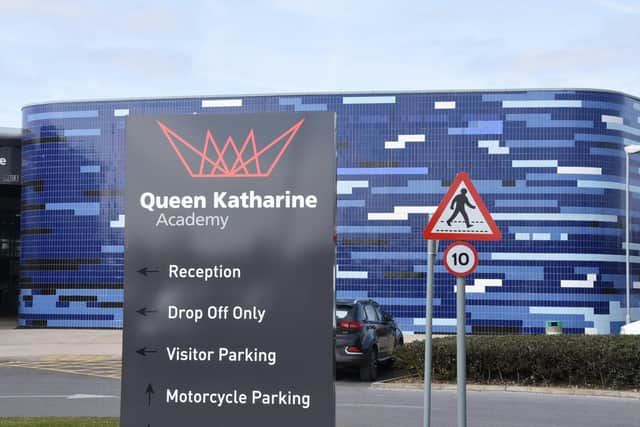

Two further areas, ‘Personal Development’, and ‘Leadership and Management’, were graded ‘Requires Improvement’ – with only one area – the Sixth Form Provision - deemed ‘Good’.
The findings represent a significant downturn in standards at the school – which is part of the Thomas Deacon Education Trust. It was previously rated Good in all areas at its last inspection, in December 2019.
However, school leaders assert that improvements are already being seen since new measures were introduced.
Rick Carroll, Interim Principal of Queen Katharine Academy, said: “While we are disappointed by some of the judgements, the Ofsted report matches our own assessments of where improvements are needed, and where steps are already being taken.
“Since January, the school has introduced a number of important changes, including the appointment of new leadership roles and extra support from the Trust. We are pleased that inspectors recognised that these changes are beginning to have an impact on all aspects of school life.”
An excerpt from the Ofsted report reads: “The teaching does not align to the ambition of the curriculum. Pupils do not develop a secure understanding of the subjects they study. As a result, most pupils do not achieve well.”
Assessing the behaviour of pupils, the inspector also highlighted an issue with bullying. “Around the school, particularly in social times, too many pupils behave in a way that leaves other pupils feeling afraid or unsafe, the report reads.
“Despite this, pupils are safe in this school. New leaders in place acknowledge that there is significant work to be done to address bullying in the school. While staff encourage pupils to report instances of bullying, many pupils do not do this because they do not have the confidence that staff will deal with the issues that arise.”
However, the inspector acknowledges some positive changes the school has made, adding: “Since January 2025, new acting leaders are addressing the areas of weakness in the school. The introduction of new policies, systems and processes are providing better clarity to staff. For example, the new behaviour policy clearly sets out how staff respond to behaviour concerns.”
Praising the Sixth Form provision, the report goes on: “By contrast to the rest of the school, the quality of education and student behaviour in the sixth form is stronger. Teachers are experts in their subjects.”
Responding to the report, Mr Carroll added: “Since becoming Interim Principal, I have been genuinely encouraged by the dedication of our staff and the hard work and willingness of our students to embrace these changes.
“The comments inspectors made about the changes gives us confidence knowing we are working on the right areas, and impact will be felt over time.”
Scott Hudson, Chief Executive of Thomas Deacon Education Trust, commented: “We are committed to supporting Queen Katharine Academy, investing in leadership and resources to ensure every student has the best possible opportunities.
“We are pleased that many of these changes have been recognised by Ofsted inspectors. With additional leadership appointments, committed staff, and students who are embracing these changes, we are confident they are already having the necessary impact in the school. It is also very pleasing that the strength of the Sixth Form continues to be recognised by Ofsted inspectors.”
The Trust says some of the recent changes made at the school include:
• A new ‘learning day’ structure
• New processes and systems to create a more consistent approach to managing behaviour
• A linguistics pathway to support students who speak English as an additional language,
• Closer work with external partners to help students who need extra support with their education.