
Mayor's View: High time we fixed our crumbling fen roads
“The dips, the bumps and the cracks that can be hair-raising to navigate at times”
You don't have to drive far out of Peterborough before you reach some of our worst rural fen roads, writes Combined Authority Mayor Paul Bristow.

And many of us know the dips, the bumps and the cracks that can be hair-raising to navigate at times.
First, let me be clear about who does what. My Mayoral authority isn't responsible for road maintenance. That is the job of Peterborough City Council and Cambridgeshire County Council. But I am responsible for the bigger picture of trying to make transport better across our whole region, from roads, to trains to buses. And this particular problem on our fen roads has been going on for too long.
The cause is the ground beneath them. Around 40 per cent of Cambridgeshire sits on peat, and more than 1,100 miles of the county's roads are built on it. Peat moves. It shrinks in dry weather and swells in wet, so the roads on top of it are more likely to crack, sink and buckle.
It also makes them expensive to look after. Repairing a road on peat is more difficult – you have go down further into the ground. It can cost up to five times as much, and the repair can last half as long. Yet Government funding doesn't properly recognise the extra cost of building and maintaining roads on difficult soils. I think that is wrong – and it’s another example of how the East is underfunded. We just need to fix our roads.
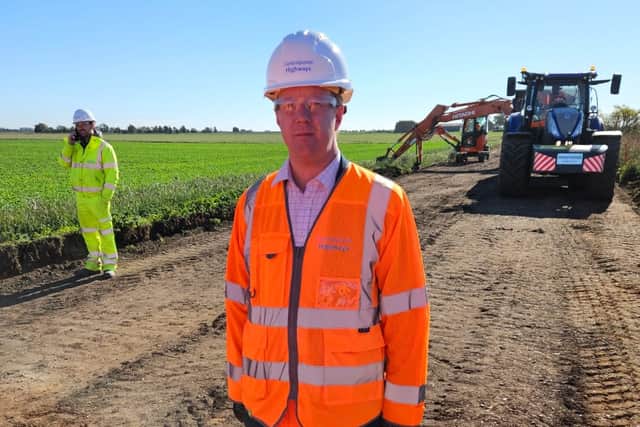
So my Combined Authority has given the County Council £1.5 million to find out what actually works. Work started in August on Upwell Road just outside March, where seven different repair techniques are being tested side by side on the same stretch of road.
They include deep soil mixing, which strengthens the ground itself by blending the soft soil with a binding material, and chemical stabilisation, which treats the soil to make it firmer. A third approach uses lightweight materials in the road's foundations, so there is less weight pressing down on the soft ground below. There's other methods too.
Each section will then be monitored for at least 12 months. That evidence is the whole point. If the new methods last longer, we will be able to show it, with real data from a real road, and make the case to Government that doing the job properly the first time saves the taxpayer money in the long run.
Poor roads also cost the economy beyond their repair. It’s people getting to work later, it’s businesses and farmers transporting goods slower – broken roads mean lost time and money.
The Fens are a national breadbasket, and have a growing economy. We deserve roads in decent repair, just like any other part of the country.
I’m looking forward to seeing the evidence from this trial, and then helping make the case to Government for fairer funding keep our roads in decent repair.