
Cambridgeshire farmers call for homegrown food targets on Back British Farming Day
Cambridgeshire farmers called for homegrown food targets on Back British Farming Day as new NFU research reveals Britain is producing less food than it did 30 years ago.

The UK’s self-sufficiency in 10 out of 11 everyday foods, such as wheat, vegetables, beef, poultry meat and eggs have fallen in the last 30 years, the Ready to Grow report reveals.
At the same time, food import volumes are up 70% over the period while export volumes have stalled.
To turn the tide and secure a future for British food production, the NFU is calling on the government to set ambitious targets for homegrown food.
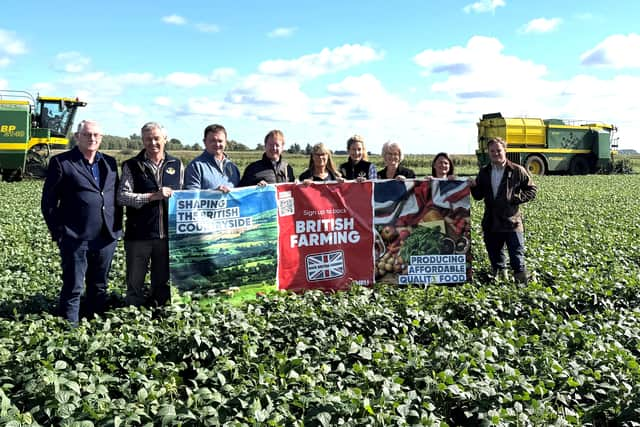
Cambridgeshire farmers highlighted these calls on Back British Farming Day on Wednesday when they met with Mayor of Cambridgeshire and Peterborough Paul Bristow and Deputy Mayor Anna Bailey at a farm near Ely.
NFU Cambridgeshire Chair Alison Morris, who farms near March, said: “Back British Farming Day is a great opportunity to champion our industry, highlight our concerns and thank the public for their amazing support.
“Farming is crucial to Cambridgeshire, with farmers here driving the economy, caring for our countryside, and supporting the environment, all while working to world leading animal welfare standards as we feed the nation and strive to deliver national food security.
“The government needs to take national food security seriously and setting ambitious targets for homegrown food production would be an important step forward in helping us to achieve this.
“Having a successful British farming industry is vital to Cambridgeshire and with continued public support and government policies which back British farmers, we can have a sustainable and positive future.
“We thank the mayor and deputy mayor for meeting with us to give us the opportunity to raise our concerns.”
The NFU’s calls are backed by the public, with new survey results carried out by OnePoll revealing that 93% of British households agree that it’s important to maintain or increase UK food self-sufficiency.
The Ready to Grow report underlines the need for action to ensure farmers can meet the public’s demand, as it shows that much of Britain’s food is being produced at a loss:
· 65% of wheat and barley grown on cereal farms came from farm businesses operating at loss.
· On lowland livestock farms, only 26% of some sheep products came from profitable farm groups.
This comes at a time when the worst drought in 50 years is set to cost wheat growers £370 million, while the UK's largest-ever bluetongue outbreak and soaring fuel, fertiliser and energy costs linked to the conflict in Iran are pushing farm finances to breaking point.
Despite this, agriculture continues to deliver for the economy. Gross value added (GVA) has risen by 57% in England and 55% in Wales, helping power the UK's largest manufacturing sector, food and drink, worth £162.3 billion and supporting 4.1 million jobs.