
Peterborough Town Hall £900k RAAC works near as council issues statement
Works to mitigate reinforced autoclaved aerated concrete (RAAC) at Peterborough Town Hall are due to begin soon.
The mitigation measures on the upper floor of the building, which Peterborough City Council estimates will cost around £900,000, will ensure the safety of the occupants using the space below.
This is due to the current floor construction (the roof of the original 1930s building) not being strong enough to withstand falling RAAC panels, according to a council report.
Although the council claimed that RAAC collapse was unlikely, it admitted that implications could be “severe” if it were to happen, including a serious risk of fatality or serious injury.
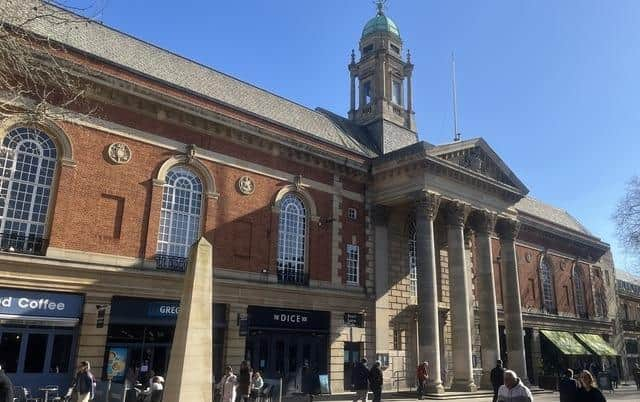

At a council cabinet meeting on July 15, head of compliance and capital programs at the council, Rachael Hunns, confirmed that the works would begin within six to eight weeks and be completed by the end of December.
When asked for a specific start date two weeks later, the council told the Local Democracy Reporting Service that it did not yet have an exact time frame.
On August 1, a council spokesperson said: “We are in the process of receiving final reports from the structural engineers to guide the appropriate solution for the Town Hall and once these are received, we will be able to give more accurate timescales.”
Ms Hunns said the council would aim to “limit public disruption” while the works took place, noting that a scaffold system would be in place next to the building’s entrance on St Peter’s Road.
She confirmed that the building would not be evacuated during the works as the area for the works was already isolated.
Since January, all city council meetings have been held at the authority’s offices in Sand Martin House instead of the Town Hall due to the condition and fire safety of the historic building on Bridge Street.
Despite the issues on the second floor, other parts of the building have remained in use such as the chamber which has been used as a coroner’s court.
A council report in July warned that the authority, as well as businesses that occupy retail units in the building, could face great financial losses if the RAAC mitigation works did not take place.
It stated: “Failure to proceed with risk mitigation measures at pace which are reasonably practicable to the level of risk is likely to result in a requirement to decant the Town Hall north and south wing, inclusive of retail units that sit within those areas.
“This will incur significant financial losses to a value of £760,000 per annum (excluding the additional losses associated with the second floor) for the council in terms of income generation from the lease agreements of the occupants within these areas.”
A council scrutiny committee recommended that cabinet members delayed the decision to approve the works in July until a long-term plan was established for the building.
However, cabinet members dismissed this recommendation and gave the works the go ahead.