
Specialist marine response teams conduct counter-pollution exercise in Peterborough river
Training exercise was designed to simulate an oil spill incident in region’s main waterway
A training exercise designed to test how local authorities and specialist response teams would react to an oil spill in the River Nene was held in Wisbech last week.
The Maritime and Coastguard Agency’s (MCA) marine oil pollution exercise was carried out by the Marine Services Team from Fenland District Council's Port of Wisbech Harbour Authority on Tuesday 13 August
Authorities say the aim of the operation was to test their Oil Spill Contingency Plan in order to ensure it would provide a ‘timely, measured, and effective’ response to incidents


The planned simulation was based on a scenario of a tug (boat) carrying out a standard refuelling procedure, known as ‘bunkering.’
However, the teams were called into action when the fuel hose 'split', theoretically spilling 3,000 litres of oil into the River Nene.
Among the kit deployed were booms to restrict the oil from spreading, along with equipment known as skimmers which are designed to collect pollutants. A huge storage bag for holding the oil ready for disposal was also used.
No real oil was used in the exercise.
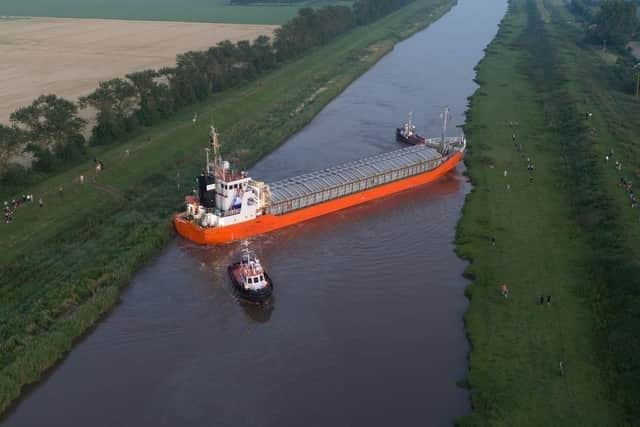
The exercise involved all of the Marine Services and Wisbech Harbour Office teams, and their Tier 2 responder 'Ambipar Response Ltd'. Staff from Port of Wisbech Ltd and Drake Towage were also involved.

The training exercise at Wisbech Port was assessed by an MCA Counter Pollution and Salvage officer. They looked at all aspects of the incident, from stopping the pollutant spreading and readiness of equipment and response teams, to environmental issues and health and safety, through to cleaning up of the pollutant.
Upon completion of the exercise, the assessor stated they were ‘very impressed’ with the port's contingency plan and how well the teams worked during the exercise.
The MCA regularly carries out training exercises across the country to ensure it is adequately prepared to tackle any potential pollution events which may threaten the UK coastline.
This includes inadvertent oil and chemical discharges, as well as plastic and natural products.
Though large-scale incidents are thankfully rare on the River Nene, they are not unknown.