
Many residents, of course, knew that the roundabout had been built on an old graveyard – with The Peterborough Telegraph publishing an article telling the story of the burial yard before the works began this year.
However, the discovery of the remains did prove a shock to some, as it had been thought that all the remains had been removed when the roundabout was built 50 years ago.
Now, thanks to Chris Page – a civil engineer working on the scheme at the time – and Toby Wood and Peterborough Civic Society, the story of what happened five decades ago can be told – including what happened to the skeletons found the first time the road was dug up.
MORE: GALLERY: Photos show Queensgate Roundabout construction site where seven skeletons were discovered
Chris Page’s recollections
In about 1977 I was part of the team carrying out the road and building work on Bourges Boulevard. At the time, as a recently qualified civil engineer with Peterborough City Council, I was appointed as one of the Assistant Resident Engineers on the construction of the new road from Woolworths to Taverners Road.
It was a joint project between the City Council and the Development Corporation and a Resident Engineer was brought in specially to run the project, with two of us his Assistants, myself and one from the Development Corporation.
As part of the work we were tasked with sifting through the old graveyard for any remains and we then built the roundabout with all of its subways and walkways in the middle which therefore actually does pass right through the depths of the old graveyard.
It was quite a bizarre situation because the graves were, in the main, unmarked and the contractor just had to dig through with a JCB behind a makeshift shroud to see what they came across. I don’t recall there being any actual gravestones but my memory may be defective.
It was fascinating, if a bit gruesome at times. A lot of the simply dug-in-the-earth graves had collapsed over the years and the bones were loose in the ground but we unearthed many brick chambers about eight feet deep.
The first coffin had been put in the bottom with wooden beams above it for a second, or even a third coffin to be placed into the family grave. However, over the years, all the wood had rotted away and the skeletons fallen onto the floor, so when we came across a chamber - usually with a heavy stone lid which was pushed aside - on the floor would lie the skeletal remains of all who had been interred in that chamber.
We were required to rebury the skeletons into new graves at the Eastfield Cemetery, as far as I can recall eight to a grave. So the guys doing the job had small hessian sacks about as big as a dustbin liner. The bones would have been divided up into separate sacks.
Once filled, the sacks were brought to our site offices, which consisted of a very cold but quite large and cramped wooden hut sitting where the Volunteer Fire brigade building now stands. So the question arose - where could we safely store these very important and valuable sacks locked away pending their reburial?
I had the job of testing all the materials which were used on the project - concrete, stone and so on and I had a small ‘laboratory’ with the various items I needed to make concrete cubes to be sent away for testing, for riddling gravel into different sizes to see if it matched government specifications, and so on.
And thus it was in my already small room that the hessian sacks got stored whilst they awaited their removal to Eastfield, in sets of 24 or so, for reburial and thus I came to share my lab with a sometimes large stack of bones in hessian sacks.
I remember seeing the lads bring in old coins and things which they had found on the grave floor though I never saw anything valuable, such as rings or jewellery. A youngster was standing in the office one day with a coin in his hand, blowing on it and polishing when someone said ‘you do realise where that’s been don’t you!’
I recall seeing black and white photographs of these excavations and hopefully they may still be somewhere in the City Council archives.
We relied on the contractors to be as decent and respectful as possible when digging up the remains, and I think they were, but I did say that if they came across anything unusual they were to let me know.
From time to time they came across a lead coffin. I don’t know why that would have been, maybe a wealthy person or because of disease. Most often they had been punctured over the years and were dry inside. But they called me over on one occasion because they had pulled one out which when they pierced it still had liquid inside. We quickly got that away for hygiene reasons immediately up to Eastfield.
However, I remember them finding another lead coffin which had been punctured by a tree. They told me to come and look as, when they had peeled back the lid, inside was a perfectly preserved skeleton held in place with its original ginger hair held down by, and covered in, very fine tree roots. I have never forgotten that as it was fascinating to see, but a bit disturbing.
I’m not too surprised that all the bodies weren’t found so that some were some left in the ground because, with the best will in the world, combing through a very large graveyard to find what they could was like trying to find a needle in a haystack - it was almost guaranteed to be incomplete.
In those long-past days health and safety was nowhere near as rigorous as it now is. We had hard hats and boots of course, though wearing them was intermittent.
We were building what is now the pedestrian underpass under the road by Cowgate and we had poured the side walls, maybe twenty feet high with a concrete floor. The roof beams hadn’t been placed so the whole thing sat in the open.
To stop anybody falling a metal barrier ran along the earth bank behind and level with the top of the wall. I assumed it was securely fastened down and leaned against it to look at something below when it tipped over and I fell forwards.
It was terrifying and I jumped about six feet landing on the two feet wide top of the wall with the concrete floor 20 feet below me. I still don’t know how I managed to recover myself from the momentum and didn’t fall to the bottom.
I also remember having to deal sensitively with complaints from people, understandably put about, but who seemed to think that I alone was responsible for the traffic jams and delays - some justifiable, some maybe not. But major road works cannot be carried out without causing inconvenience to the public of course. Fifty years later I’m pretty certain that the engineers now undertaking the new Station Quarter works at the roundabout would most likely understand.
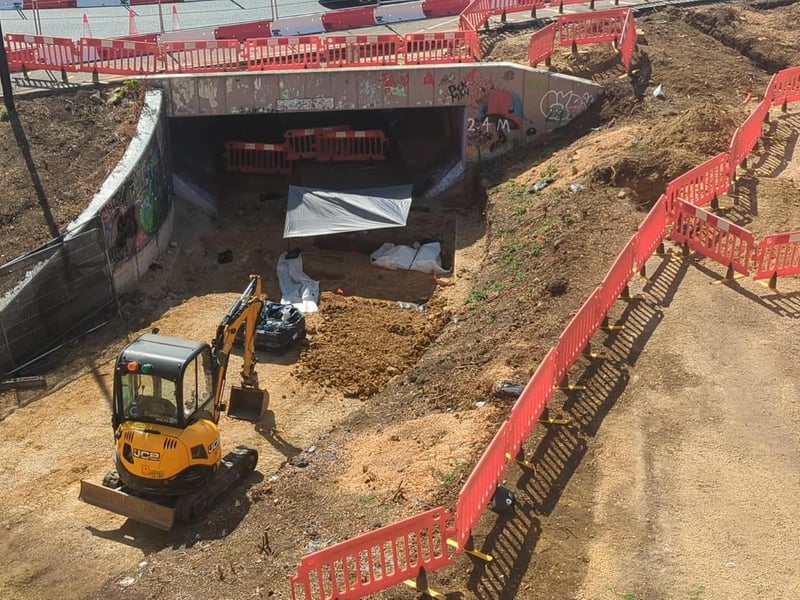
1. Queensgate Roundabout skeletons
Skeletons have been found at Queensgate Roundabout during Station Quarter works Photo: PT
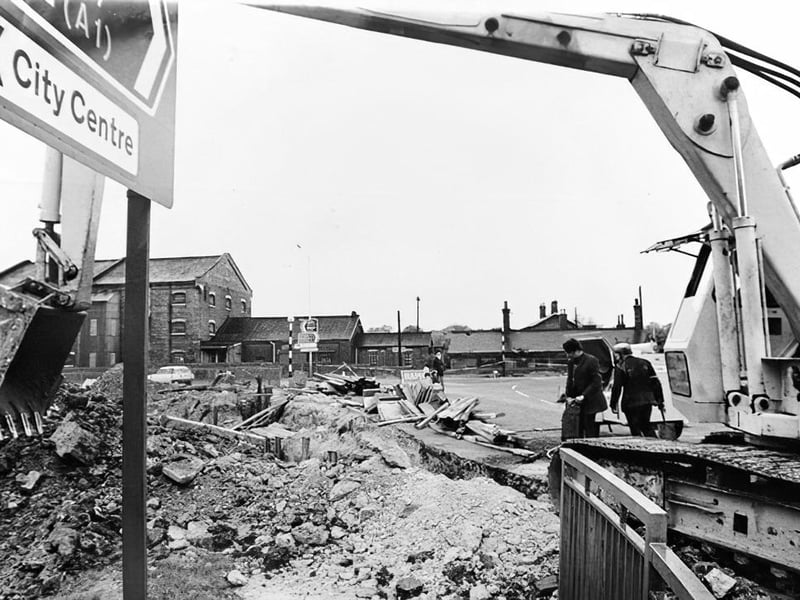
2. Queensgate Roundabout skeletons
Works taking place on the Queensgate Roundabout 50 years ago Photo: Peterborough Images
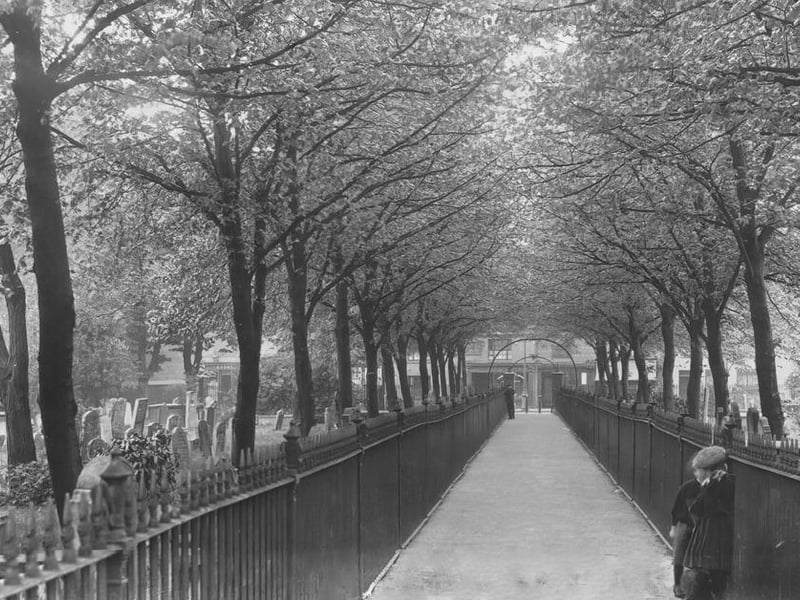
3. Queensgate Roundabout skeletons
The old graveyard where Queensgate Roundabout now stands Photo: Peterborough Images
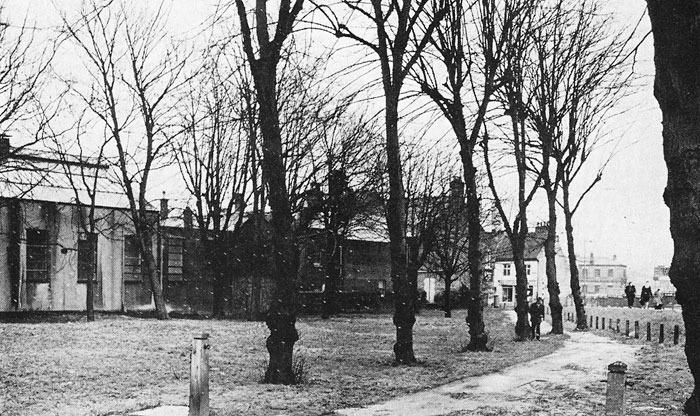
4. Queensgate Roundabout skeletons
The three-acre site at the bottom of Cowgate which is now the city’s busiest roundabout was, in Victorian and Georgian times, a burial ground. Photo: Peterborough Images