
Free art installation aims to immerse viewers in Fenland Bronze Age
A new immersive digital art installation that aims to bring the Fenland Bronze Age back to life is now on display in March.
Fen to Fire uses immersive storytelling to resurrect the Must Farm Bronze Age settlement – which was destroyed by fire thousands of years ago.
Created by Collusion and the University of Cambridge, is open at Everyspace, March Library, until 15 May with free entry.
Working with young people from Fenland, digital artist Guy Schofield used cutting-edge digital archaeology techniques, including 3D modelling, motion capture, and Artificial Intelligence (AI) to create the artwork.
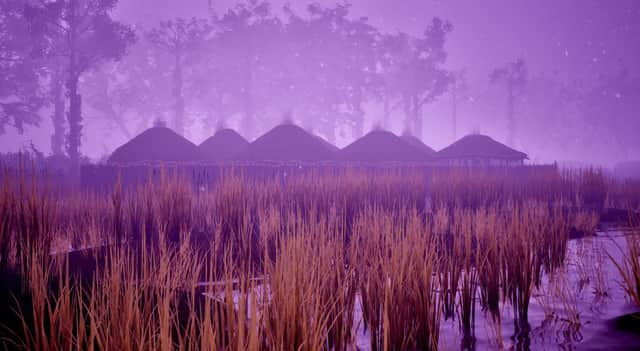

A spokesperson for the art group Collusion said: “Must Farm, near Whittlesey in Cambridgeshire, is one of Britain's most extraordinary archaeological discoveries, sometimes described as the "Pompeii of the Fens."
"Excavated by the Cambridge Archaeological Unit (CAU), the site revealed a cluster of perfectly preserved Bronze Age roundhouses built on stilts above a river. Destroyed by fire almost 3,000 years ago the site had preserved an astonishing range of rare finds including textiles, tools, weapons and even bowls of food, giving archaeologists incredible insight into everyday life.
“Supported by Collusion's SHAPE Hub programme with the University of Cambridge and funded by the Cambridge Archaeological Unit (CAU), the University of Cambridge's Collections Connections Communities and the McDonald Institute for Archaeological Research, the project has seen Must Farm's archaeologists working with Guy Schofield and young people, in workshops facilitated by independent producer Rosa Torr, to help them imagine what living in this vibrant community would have been like.”
The installation invites visitors to experience the settlement's entire lifespan, from its construction and daily rhythms to its dramatic destruction by fire. A multi-screen setup presents dynamic views of the settlement alongside close-up details and behind-the-scenes footage, immersing audiences in both the ancient world and the creative process that brought it back to life.
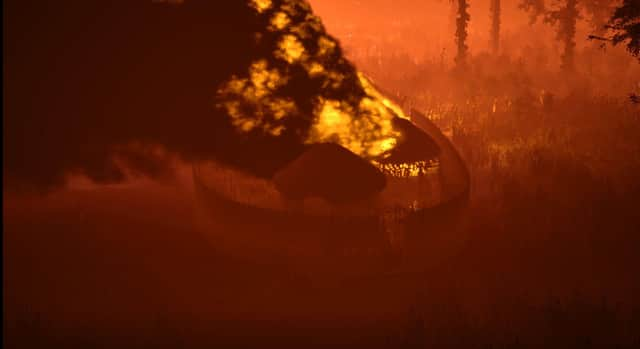
Visitors to March Library can experience the full installation, comprising the main digital artwork alongside interpretation and behind-the-scenes films offering a window into both the Bronze Age world and the creative process behind the work. Entry is free and the installation is open during normal library opening hours.
"Working with young people from Cromwell Community College has been really inspiring,” said Guy Schofield, the lead artist. “The young people brought curiosity and great ideas to the project: it has been a genuine collaboration. Fen to Fire has been an amazing platform for combining cutting-edge technologies like AI-based motion capture with archaeology and storytelling."
Rachel Drury, director at Collusion, added: “Fen to Fire is an inspiring and innovative example of what happens when artists, archaeologists, universities and young people come together around a shared story. The Fens have extraordinary hidden histories, and this project gives communities the opportunity to connect with one of the most remarkable archaeological finds in Britain in a genuinely immersive and moving way."
Dr Chris Wakefield, Fen to Fire Producer and Engagement Officer at CAU added: “When we were excavating at Must Farm the incredible preservation gave us glimpses into so many everyday moments of Bronze Age life. Fen to Fire has captured those moments and brought the site to life in a way that is both immediate and engaging."