
Peterborough mum diagnosed with incurable tumour after opticians trip
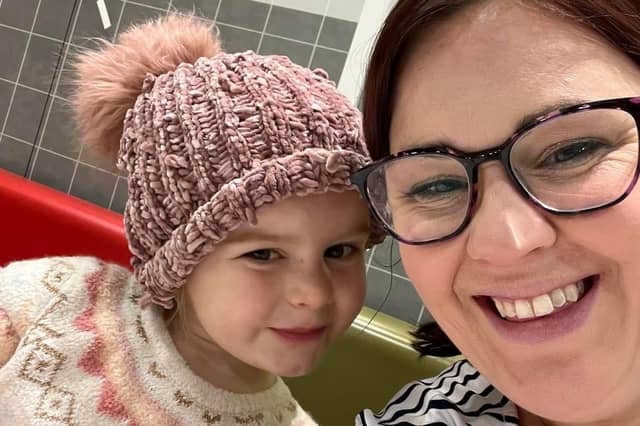

Taylor Pepper diagnosed with having a oligodendroglioma brain tumour - a rare type of brain tumour that develops from glial cells called oligodendrocytes.
A Peterborough mum who experienced no symptoms was diagnosed with an incurable brain tumour after a routine eye test.
Taylor Pepper, 34, went for a routine eye test when the optician noticed inflammation in her right optic nerve and referred her to Peterborough Hospital.
Specialists at the hospital could see some swelling behind her right eye and sent her for an MRI at Addenbrooke's Hospital, Cambridge.

A day later, Taylor got a phone call to say she had an oligodendroglioma brain tumour - a rare type of brain tumour that develops from glial cells called oligodendrocytes.
Doctors decided she needed surgery right away, and a few weeks, she had an awake craniotomy.
“Diagnosis turned my world upside down”
Surgeons removed most of the tumour but had to leave some behind because of its location. Taylor will need MRI scans to check the tumour for changes.

She said the diagnosis “turned my world upside down” and led her to sell her business and give up her driving license - relying on her husband, Chris, 33, for support.
Mum-of-one Taylor, a former cleaning business owner, from Peterborough, Cambridgeshire, said: “Never did I think I would be battling an incurable brain tumour.
"I’ve never felt so scared in all my life.
“Strangely, I have more symptoms to deal with post-surgery than I did before my tumour was removed.
“I’m scared of being on my own due to the risk of seizures, and I feel tired all the time. My husband does a lot for me - it’s taken over my life.
“I used to work for myself, but I have had to give up my driving licence, which meant the end of my cleaning business.
"My little girl, Ava, has just started school, and my main priority is to try not to let my diagnosis affect her too much.
"I’ve been keeping busy doing things with her, making memories.”
"I was in shock, with brain tumours a lot of people get headaches and I had no symptoms at all."
On April 9, 2024, Taylor went for her routine eye test that she attended every two years.
After the eye test, the optician said the saw inflammation in her right optic nerve and would need to refer to to Peterborough Hospital.
Taylor said: "I have an eye test every two years, I did the test and they said they needed to speak to me.
"I had a scan of my eye and they said they saw inflammation on my right optic nerve and they would need to refer me to the hospital."
Doctors at Peterborough Hospital noticed some swelling and referred Taylor to specialists at Addenbrooke's Hospital, Cambridge for an MRI scan.
The following day, Taylor got a call to say that she had an oligodendroglioma brain tumour.
"That was a really scary moment, Taylor said.
"I was in shock, with brain tumours a lot of people get headaches and I had no symptoms at all.
"They reassured me that it wasn't cancerous or aggressive but said it needed to be removed asap."
In May 2024, Taylor underwent a seven-hour awake craniotomy to remove as much of the tumour as possible.
Due to the location, doctors were interacting with Taylor to make sure they didn't hit a nerve that could stop her speech or paralyse her.
Taylor said: "The tumour was pressed on the nerve that controls my movement and speech.
"They wanted me to be awake through the surgery so I could speak to them so they knew they would not be paralysing me or creating any lasting damage."
“I call the tumour Belinda and that makes it a little easier for me."
The operation was deemed successful as they managed to remove most of the tumour, but some of it was unable to be removed due to its location.
Taylor was told that the tumour was incurable and she would need to be monitored constantly to make sure it doesn't grow or turn cancerous.
She said: "It is really scary, I am a lot more stronger now I have been allowed to come to terms with it.
"When I got given my prognosis, my surgeon said people with these tumours last 10 to 15 years but I have spoken to people who have lasted 30-40 years with these tumours.
"My life has been turned upside down, I had to close my business and I can't drive - someone has to be with me all the time.
"You do get stronger, I call the tumour Belinda and that makes it a little easier for me."
Taylor has to have an MRI scan every three months over the next two years.
“Until you’re in this situation, no one truly knows what it feels like."
Her last scan showed the tumour had grown and Taylor might have to have chemo and radiotherapy.
Taylor said: "It’s very tough. The hardest thing for me is not knowing whether I’ll see my little girl grow up.
“Until you’re in this situation, no one truly knows what it feels like.
"That’s why I’m grateful I was able to access The Brain Tumour Charity’s online support groups.
"The online community helps me to cope, as they all understand and are going through the same thing.
“This has changed my whole life. I'm not able to do what I used to be able to do and my confidence is gone, but I'll get it back. I'm determined to fight this and I won't let it win."
Catherine Fraher, director of services and digital health at The Brain Tumour Charity, said: “We're really grateful to everyone who shares their story to raise awareness of brain tumours.
"We know that every family deals with a brain tumour diagnosis and its aftermath in their own unique way.
"That's why The Brain Tumour Charity offers support to anyone who needs it. It’s so important for them to know that they are not alone.
"You can find out more about our specialist teams by calling our Support and Information Line on 0808 800 0004 or via our website - https://www.thebraintumourcharity.org/