
Hospital delivers sustainable pledge as part of new day treatment unit in Stamford
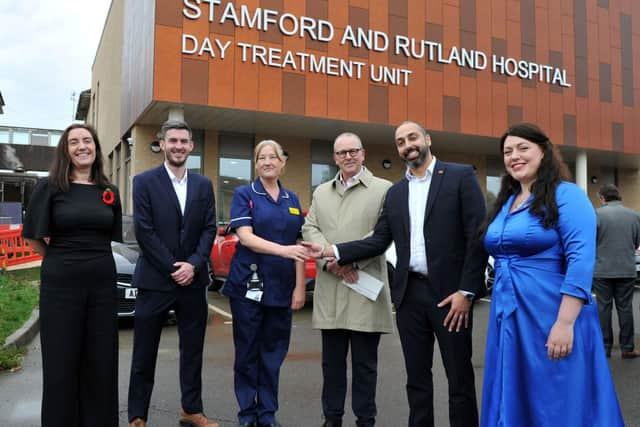
A series of sustainable and ecological initiatives are being put in place as part of Stamford & Rutland Hospital’s new Day Treatment Unit building project.
North West Anglia NHS Foundation Trust (NWAFT), which runs the hospital, has been working with construction partners and architects in recent months to deliver and meet a range of key environmental goals.
Many of these fall under BREEAM (Building Research Establishment Environmental Assessment Methodology) – which provides a framework for setting standards in sustainable design, construction, and operation - ensuring projects meet sustainability targets and contribute to a net-zero future.
At Stamford, they will include:

• The introduction of a rooftop solar scheme which expected to generate up to 9,950 kWh of clean energy each year, supporting both environmental responsibility and long-term energy efficiency at the unit.
• Based on the UK’s independent energy regulator OFGEM's average home calculations this is enough to power almost four average UK homes for a year and will result in an estimated saving for the Trust of £25,600 over 10 years. This initiative will prevent around 2.3 tonnes of CO₂ emissions annually.
• As part of the landscaping, a decking area will be made from recycled materials using a blend of recycled plastics from grocery bags, milk and detergent bottles, as well as reclaimed wood fibres from sawdust and wood scraps from mills.
• Further landscaping, tree and other planting to improve biodiversity around the site is also planned.

The Trust says it has spent several months “working with ecologists to monitor a resident bat colony in part of the old Dronfield Suite, which is being demolished as part of the redevelopment proposals”. A trust spokesperson said: “Following a second round of night observations over recent months, the experts were confident that there was no longer any bat activity at the site.”
In the UK, all bat species are European protected species (EPS) under the Conservation of Habitats and Species Regulations 2017. It is illegal to deliberately kill, injure, disturb, or capture bats, or to damage or destroy their active breeding or resting places (roosts).
Chris Todd, Director of Estates and Facilities at NWAFT said: “We have been working collaboratively with our lead construction partners Darwin Group, project architects Metropolis Planning Ltd and other associated agencies towards achieving a range of BREEAM standards.
“The Day Treatment Unit building is designed to be energy efficient and uses renewable technologies where possible.
“In addition, sustainable/responsibly sourced materials are used throughout, with water-saving measures and biodiversity enhancements being incorporated.”
He added: “We have also worked hard to ensure construction waste is minimised and recycled wherever possible – which is being demonstrated in some of our landscaping designs.”
The Day Treatment Unit has recently been handed over to the Trust and is due to welcome its first patients in the coming weeks.