
From one up two down Peterborough home to GP surgery with 31,000 patients - the incredible 30 year story of Thistlemoor Medical Centre
Surgery marks 30th anniversary with special guests
Thirty years ago, a GP surgery was formed in a small one up – two down Millfield home near the centre of Peterborough, with 700 patients signing up.
Now, the Thistlemoor Medical Centre is one of the biggest facilities in the city, caring for more than 30,000 people, has grown from a team of one doctor and a part time nurse to a team of 20 doctors, 12 nurses, 3 paramedics and a team totalling around 100 staff members, and is also taking part in pioneering projects to help residents in the city centre.
The transformation of the surgery has taken three decades – and a special celebration has been held to mark the 30th anniversary of the centre.
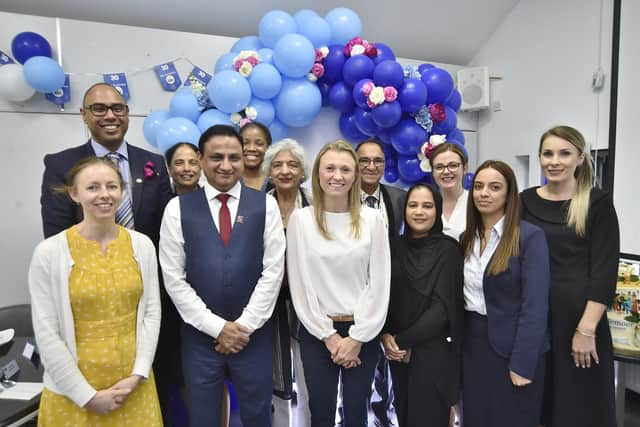

Dr Neil Modha, whose mum Dr Nalini Modha, founded the surgery in 1994, spoke to The Peterborough Telegraph about the surgery’s journey – and what comes next.

‘Mum saw the potential’
Dr Modha said: “My mum working as a police surgeon. She was struggling as she was being asked to go to court, looking after rape cases, child abuse cases in the middle of the night, so she left that, and basically didn’t have a plan. But then someone told her there is a GP surgery round the corner that is about to be closed down, so she saw that as an opportunity to start her medical practise there.

"It was a typical inner city Peterborough terrace house, one up two down. I guess compared to the facilities you’d expect now of a GP surgery, it was not in keeping with modern times, but she saw the potential of starting something for herself.
"She had 700 patients to start with, My dad joined her shortly after that, and you know, they worked really hard.”
The original home is now part of the huge complex at Thistlemoor – but the ethos has stayed the same – so much so that some of the original 700 patients are still registered at the surgery now.
Dr Modha said: “We’ve never been supported financially to get to this stage – we have had to do everything incrementally, knocking buildings down and building new ones.
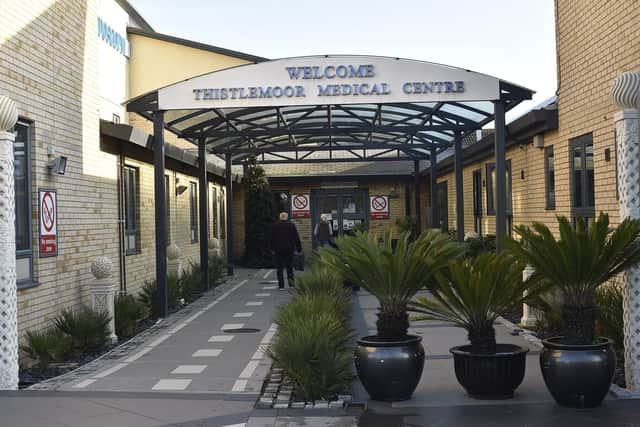
"We have had to think about where does a doctor add value, where do other people – healthcare assistants, nurses, physios, pharmacists, where could they help patients.
"We grew week by week, month by month, year by year – as soon as we grow by three or four thousand patients, that is a sign we need more clinical space.”
Belief in the community
The surgery now employs around 140 people, who come from many different backgrounds – as the thousands of patients who rely on the surgery do.
Dre Modha said: “Along the way, often it didn’t make sense to do what we’ve done, but we believed in doing it because we believed in the community and the people here.
"Our population here, often they don’t speak English fluently, they are often in jobs that don’t allow them to take sick leave, they are in the kind of contacts that are not secure in the long term, they don’t have family support around often in this country.
"My parents are migrants from Uganda, they came to England with £50 in their pockets and their medical degrees, so supporting communities to integrate really fuels us.
"We have become famous for recruiting from the community – our staff live in this area, in these communities. Many of our staff have never worked in healthcare before, we give them training, and they become healthcare assistants, or work in admin. My practise manager, Paulina, upskilled herself, did an MBA, a medical science degree, and has been the manager for 12 years through seven CQC outstanding inspections.
"That is what we are looking for – talent – and we see lots of talent in the community.”
Recent successes highlight difference being made at surgery
Some of the biggest successes at the surgery have come in recent months, including a campaign to encourage more people to have the MMR jabs. The surgery ran drop in clinics and a social media campaign, which resulted in a big take up of the jab in just a few weeks.
Dr Modha said the surgery was also working with patients were were having a large number of appointments, despite not having any major long term conditions.
He said: “We focused on a cohort of our population that frequently attend the surgery, maybe 20 times or more in a year, who don’t have cancer, diabetes or anything like that.
"There may be mental health issues, but not any physical ailments, so we have done a piece of work to look into what is happening. From our point of view, it is not to tell them off and say you shouldn’t be using this – we are here for help and support. Our thought is that we were missing something. We were supported by the council, by the voluntary sector, to carry out interviewing to find out what was happening in their lives – their employment, their support networks, and try and make a plan that got them some support. What we found was was it reduced their attendance at a GP by 75 per cent, and it reduced their attendance at the Emergency Department by 30 per cent.
"Just taking the time, not as a medical intervention, just listening to people, thinking about what was going on in their lives, has made such a difference to people.”
Celebrating the past – and looking to the future
To mark the 30th anniversary of the surgery, a celebration was held last week, with staff joined by special guests, including Brenda Swift – wife of legendary city councillor Charles Swift, who did so much in the Millfield area – and even the surgery’s bank manager.
Dr Modha said: “Brenda and (son) Paul Swift were there, and that was really touching because Charles had such a big relationship with this area."
After marking three decades of helping the community, plans and hopes for the future include a multi-million pound hydrotherapy and rehab centre, as well as an NHS dentist – and possibly even opticians service.
Dr Modha said: “In the next five years I would expect us to go from 31,000 patients to 36,000 patients.
"I would expect more consulting space here.
"But for me, I guess part of the journey we are going on is to think about the wider primary care – we are working on collaboration with the pharmacy at the moment, and that makes a lot of sense. Why couldn’t that be done with dentists, why couldn’t it be done with opticians? What else could we put together in this centre to add value to patients?”