
Political View: Thirty years on - back at Peterborough City Council
Having returned to Peterborough City Council after a gap of thirty years, I have reflected on the similarities and differences, both for me as a councillor and for Peterborough as a city, writes LibDem's Paul Wiggin.

Just as in the 1990s, local government review was on the agenda. Then it was a case of whether Cambridgeshire would see several unitaries, with the complete abolition of the County Council, or, as happened, just the one in Peterborough. Now we await central government’s decision on what is to happen to Peterborough.
A further familiarity is the need for different parties to cooperate to create a stable administration that puts the benefit of the city above individual party interests. Through a multi-party administration, collaboration and communication can result in drawing on the best of all those involved rather than party-political point scoring.

Lastly, it is the motivation of councillors to work for their wards. Often, but unfortunately not always, councillors who are closely connected to their communities are able to rise above national (and even international) issues and focus on local needs when getting elected.
Of course, there are significant differences: meetings in Sand Martin House rather than the Town Hall, power residing in the Cabinet rather than with committees, and the breadth of issues that a unitary authority has to face.
The local government review could well see the council expand its boundaries. Villages and smaller towns have concerns about joining a much larger urban area, whilst the needs of the city could be diluted if the authority is too large and too rural.
Another difference is the political make-up of the Council. Peterborough has not been an example of two-party politics for a long time, but now, with six groups plus independent councillors, the political landscape is even more complicated.
Both the similarities and the differences provide challenges and opportunities. Peterborough is a vibrant and diverse city and should celebrate its identity.
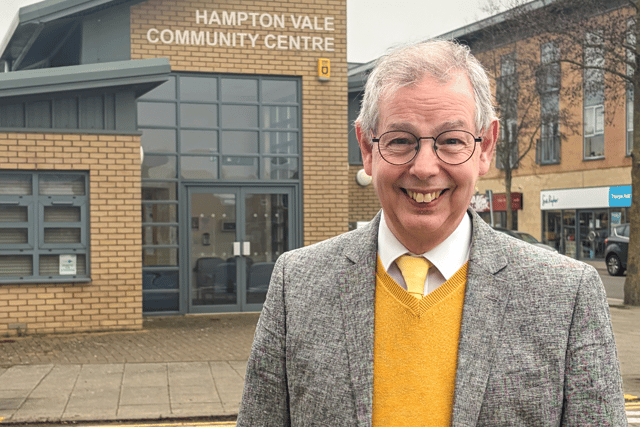
When I left the Council, the development of the Hamptons was a recently signed agreement. Now it is a thriving community which I am proud to represent.
The bid for City of Culture status highlighted the ambition of the city but also reflected the reality of its artistic and cultural life, from local voluntary groups to venues offering a range of theatre and music, and the growing variety of exhibitions in our Cathedral.
We also share the sense of optimism that comes with the start of every season for our sporting teams.
Thirty years on, I have returned to a Council that faces financial issues, nothing new; political challenges, nothing new; and the growing needs of the residents of our city, again nothing new.
Ultimately, at the heart of local government is the responsibility of every councillor to work for their ward, to put the city at the heart of their decision-making, and to be approachable and visible.
Some of the challenges may be different but, ultimately, the role of a councillor has not changed that much, and I am proud to work with like-minded colleagues, not only in my own Liberal Democrat group but across the Council.