
This rugged £186 smartwatch rivals Garmin with AMOLED screen and diving mode


This article contains affiliate links. We may earn a small commission on items purchased through this article, but that does not affect our editorial judgement.
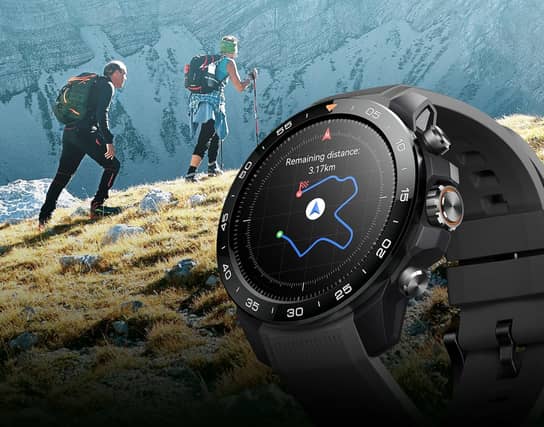
With a 1500-nit AMOLED display, 10ATM water resistance and 60-day battery claims, this rugged watch is built for anything.
If you're shopping around for a smartwatch that's ready for some tough times in the great outdoors, you might naturally migrate to the bigger brands like Garmin or Suunto. And if you wanted one with an AMOLED screen, Bluetooth calling, military strength testing and a battery that can last for weeks, you know it's going to cost a pretty penny.
But is it? A new watch has just been launched by Mibro, a Chinese tech firm, which packs in some seriously impressive features and you can currently buy it for £186.
It's the Mibro GS Explorer S, and its features start with the impressive 1500-nit HBD AMOLED display. It's really bright, which is exactly what you need on an outdoor adventure.
It's also seriously tough. Mibro put its new flagship watch through 17 military standard tests, which means it can cope with extremes of weather, bashings from rock faces and, obviously, submersion.
There's also dual-frequency five-satellite GNSS for location tracking and a 10-axis motion sensing system, which means it's always tracking your precise movements.
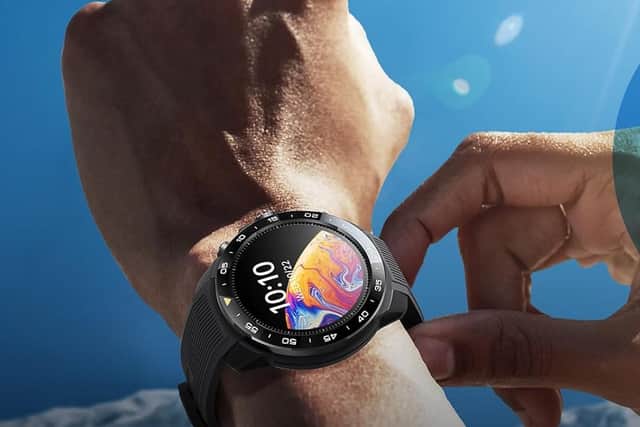
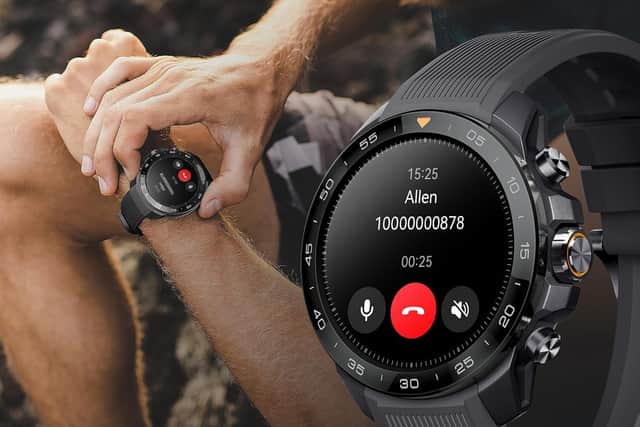
And then there's the water resistance. Another of the GS Explorer's stand-out features is its free-diving mode. And its water resistance rating is 10ATM, which can withstand depths of up to 100 metres. And, you have to remember, this is a phone with chunky buttons you can operate with gloves on, and Bluetooth calling. Yes, the Bluetooth calling system actually works underwater.
The free-diving mode is one of several customisable setups you can flick over to, and it gives you depth and time warnings, current depth indication, and other tailored data.
But there are plenty of other modes for other extreme sports, all wrapped up in an intuitive interface called Galaxy OS 2.0. It's eerily similar to Huawei's operating system, as is the companion app. And that's no bad thing.
It feels light on the wrist, but incredibly robust. There are absolutely no build-quality qualms here. There’s even a premium titanium version, which takes this to the next level.
Battery life is also a strength, with claims of up to 60 days in a restrictive mode, 20 days in a daily mode, and around 15 hours with all the sensors on. I found that's all pretty realistic while using the watch out and about.
The body trackers, which include heart rate and blood-oxygen monitoring, do take their toll when you use the most accurate settings, but it's possible, with a little careful management, to keep the watch going for over a week in normal use, and that's superb.
I did experience a few glitches with the tracking and, comparing it with other watches I have at my disposal, some of the data was a little off. But I've always found they need time to settle in.
That said, the overall feel was that the Mibro interface needed some finessing, which can doubtless be done through firmware updates, because it occasionally missed the fact I'd gone out on a bike ride, for example, and I missed a few notifications from time to time.
Overall though, it's a seriously impressive piece of kit, especially considering it costs less than £200 at the moment.
I'd also go as far as to say it's more attractive than the rivals from Garmin and Suunto, and it feels more robust than most of them.
I've always been a fan of Chinese smartwatches and, while there are a lot of rubbish examples out there to sift through, every now and again you'll find a gold nugget. And the Mibro GS Explorer S is one of them.