
Political View: Local Government ‘all change’ means the end of an era.
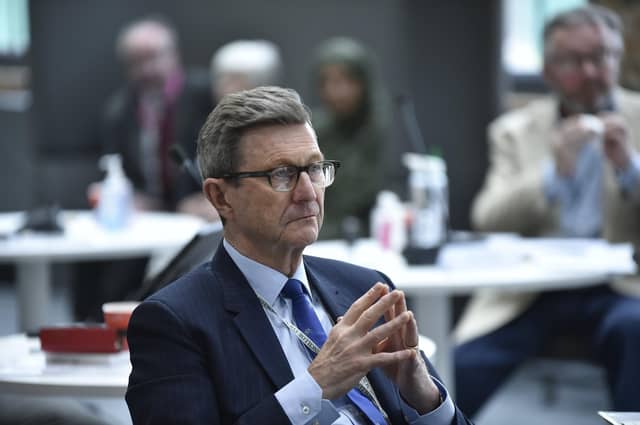

The phrase “the end of an era” is often used in politics when a long-standing system, leadership style, or balance of power begins to change, writes Conservative Group Deputy Leader Steve Allen.
In the context of local government, it reflects a period in which traditional political structures, party dominance, and methods of governing at the local level are being reshaped by social, economic, and institutional pressures.
For decades, local government in our democratic system operated within relatively stable political arrangements. Certain political parties dominated specific regions, councillors often served long tenures, and the relationship between local authorities and central government followed familiar patterns. Local councils were seen primarily as service providers responsible for housing, waste management, planning, and community services. Political competition certainly existed, but it was frequently predictable and rooted in established loyalties within communities.
However, recent developments suggest that this long-standing model may be coming to an end. One key factor is changing voter behaviour. Citizens are increasingly less loyal to traditional political parties and more willing to support independent candidates, smaller parties, or issue-based campaigns. Local elections that once produced predictable outcomes are now more competitive and fragmented. This shift weakens the historical dominance of the established parties and creates a more fluid political environment within councils; often leading to instability and uncertainty with experience giving way to a plethora of conflicting opinions and unsteady alliances.
Another significant change lies in the growing complexity of local governance. Local authorities are no longer limited to delivering basic services. They now play important roles in economic development, environmental policy, public health, and community regeneration. Issues such as climate change, housing shortages, and social inequality require councils to work with regional bodies, private partners, and community organisations. This expansion of responsibilities has altered the political expectations placed on local leaders and councillors.
Financial pressures have also contributed to the sense that a political era is ending. Many local governments face tight budgets and funding constraints, often linked to broader national economic policies. As resources become more limited, councils must make difficult decisions about which services to prioritise, reshaping local political debates, moving them away from ideological divisions and toward pragmatic discussions about sustainability, efficiency, and community priorities.
Leadership structures within local government have evolved as well. Peterborough for some time has operated a Leader and Cabinet model, this of course more recently supplemented by a directly elected Combined Authority regional mayor. It could be argued these changes from the traditional committee model have concentrated authority with fewer individuals and created clearer accountability, but they also transformed the political dynamics within councils and between local and national government.
Taken together, these developments suggest that local government is experiencing a period of political transformation. The traditional structures, loyalties, and governing styles that once defined local politics are gradually giving way to more diverse representation, new leadership models, and evolving expectations from citizens. In this sense, the phrase “the end of an era” captures the transition from a stable but rigid system toward a more dynamic and uncertain political landscape for local government.
The changes to Council structures enforced by the impending Local Government reorganisation mean that politicians (and in fairness also council officers), are currently walking a tightrope of uncertainty, whilst having to whistle along as though unaffected by the imminent changes.
In Peterborough the ‘’end of an era ‘’ mood is being further reflected in the decision of several experienced Councillors deciding not to stand in the forthcoming City Council elections, with that potentially being in focus even more so, when in May of next year the local elections will be on an ‘all-out’ basis – where sitting councillors will stand down, and across the council the elections will be to choose representatives for the new Unitary Authority replacing the current County and district councils.