
Peterborough council tax could increase by more than £200 under Local Government Reorganisation plans
Peterborough residents will see their council tax bills rise as a result of Local Government Reorganisation (LGR) – but residents in other parts of the county could see a reduction in their bills.
From April 2028, the current seven councils in Cambridgeshire and Peterborough, including Peterborough City Council, will no longer exist and be replaced by larger unitary councils due to LGR.
It is part of the government’s plans to transfer more powers and funding from national to local government and move away from the current two-tier system of district and county councils in England.
At a joint meeting of Peterborough City Council’s scrutiny committees on October 28, it was heard that Peterborough residents’ council tax bills would rise as a result of the changes.
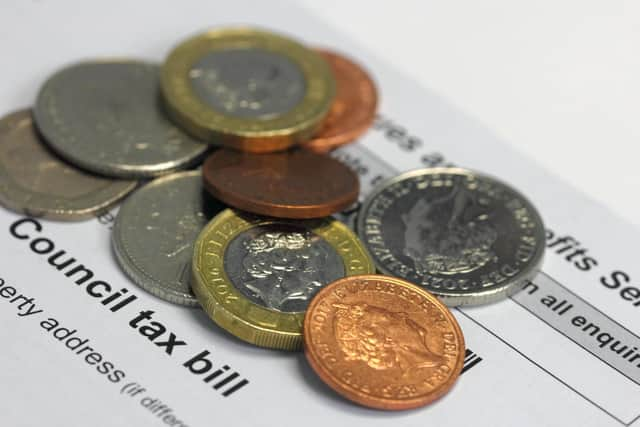

How could your council tax bill be affected?
Members of the joint scrutiny meeting decided that Option A and Option D for LGR should be taken forward for further consideration by full council and subsequently cabinet before a final preferred option is submitted to government on November 28.
Option A – Unitary 1 (Peterborough, Fenland and Huntingdonshire), Unitary 2 (East Cambs, South Cambs and Cambridge City)
Option D – Unitary 1 (Peterborough and West Hunts), Unitary 2 (Fenland, East Hunts and East Cambs), Unitary 3 (South Cambs and Cambridge City)
The government will ultimately make a final decision on the option to take forward.
On day one of the new unitary councils, households will pay different amounts of council tax depending on the predecessor district/city area they are located in.
Each new authority must harmonise bills within seven years, with options for the new unitary councils to consider as to how quickly this occurs and how these single rates are calculated.
Peterborough currently has the lowest council tax rate for Band D properties in the county, meaning harmonising would likely see a rise in bills.
If Option A is taken forward with a high level of harmonising, Peterborough’s Band D council tax bill could rise by £216. If Option A is chosen, residents in Cambridge would see their bills remain the same with a high level of harmonising – or could even see them fall by £94 with a low level of harmonising.
If Option D is taken forward, the current Peterborough Band D bill of £1,749.42 could rise by £31.52 (1.77%) to a total of £1,780.94. In contrast, residents in the proposed West Huntingdonshire area of Option D could see their council tax bills decrease by £85.56.
At the joint scrutiny meeting, Cllr Gavin Elsey of Peterborough First asked if any council tax rises in the two years leading up to the implementation of LGR would be taken into consideration.
Deputy chief finance officer, Emma Riding, confirmed these decisions would be made further down the line and that some figures could change.
Speaking about the proposed Option D council tax changes, she said: “There are some options with council tax harmonisation in terms of you can do it over a number of years, although that is not advised.
“The advice is that you do it as soon as possible. I know 1.77% is an increase but it’s not a significant increase.”
She added: “It is about doing the right thing for sustainability in the future and that’s the way you’re going to have to look at it when the time comes for making a decision.”
Other key takeaways from the meeting
Potential headquarters
A number of councillors asked officers if any thought had been given as to where the headquarters/main hubs would be for the proposed authorities, with some concerned they may have to travel significant distances to attend meetings.
Adrian Chapman told councillors they were “not at that point yet” and it was still a “matter to be determined”.
Monitoring officer Neil McArthur added: “No decisions have been taken and I don’t think there are even hypotheses about where you would have a civic centre in any of those models.”
Co-opted member Nick Sanford, former Mayor of Peterborough, thought it was “surprising” no thought had been given on the matter.
He said: “OK you can set up service hubs, but there is inevitably going to be a need for people who are using council services to travel to where the headquarters is.”
Number of councillors for each option
The expected number of councillors there would be in each proposed unitary authority was confirmed at the meeting.
Option A would see the northern unitary of Peterborough, Fenland and Huntingdonshire have 155 councillors while the southern unitary would have 115.
Option D would see the Greater Peterborough unitary of Peterborough and West Hunts have 79 councillors, while the Mid Cambs unitary would have 104 and the Greater Cambridge unitary would have 87.
There are currently 60 councillors on Peterborough City Council.
Savings and costs of each option
Financial data collated by finance officers and external advisors revealed that a two unitary model like Option A would generate annual savings of £12.1 million with a payback period of six years.
It would come with one-off implementation costs of £34 million and one-off transformation costs of between £11 million and £16 million.
Meanwhile, a three unitary model like Option D would generate annual savings of £1.4 million with a payback period of 50 plus years.
It would come with one-off implementation costs of £41 million and one-off transformation costs of between £7 million and £12 million.
Peterborough City Council officers informed councillors that Option A would be the “most balanced and sustainable option for the region”, provided local identity and engagement were actively protected.
All the projected savings would be split between the authorities.
Positives and challenges
It was heard that Option A, which would include two unitary authorities, would provide greater financial benefits with a shorter payback time while Option D, which would include three unitary authorities, would offer better local responsiveness and sense of identity.
The report before councillors said Option D was the “most locally responsive and identity-driven” but faced financial vulnerability.
On the other hand, it noted that Option A was “balanced in scale and financial efficiency” but may not fully address the distinct needs of deprived northern communities.
All 60 Peterborough councillors will choose between Option A and Option D at a full council meeting on November 12.
A final decision on the preferred option will then be confirmed by cabinet members on November 18 before a submission is made to government.