
Concerns over impact of growth in Peterborough on Eye village
Dale McKean says village will not be able to cope with more developments
A resident of a Peterborough village has voiced concerns over the potential impact that the city council’s growth plans will have on the area.
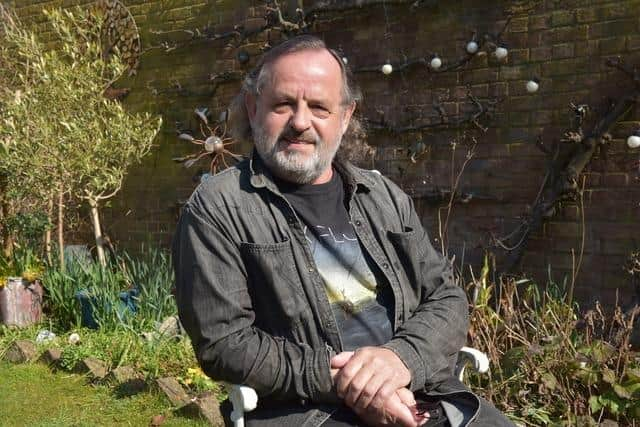
Dale McKean, who has lived in Eye for more than 40 years, fears the village could not cope with more houses and industrial developments, which are being proposed in Peterborough City Council’s Draft Local Plan.
The Local Plan Review for 2024 to 2044 is proposed to replace the current Local Plan adopted in 2019 and will set out how the city and surrounding villages will grow and change over the next 20 years.

It was put on hold last year to incorporate changes to the National Planning Policy Framework (NPPF) made by the incoming Labour government.
For Peterborough, these changes resulted in an increased housing target from 18,720 to 20,120 houses by 2044 (1,006 per year).
The Local Plan also addresses issues such as employment, climate change and transport. A public consultation on the draft plans is scheduled to take place between April 11 and May 29 this year.
Mr McKean, who has campaigned on various issues in Eye in the past, raised objections to the Draft Local Plan at a council planning meeting on March 18.
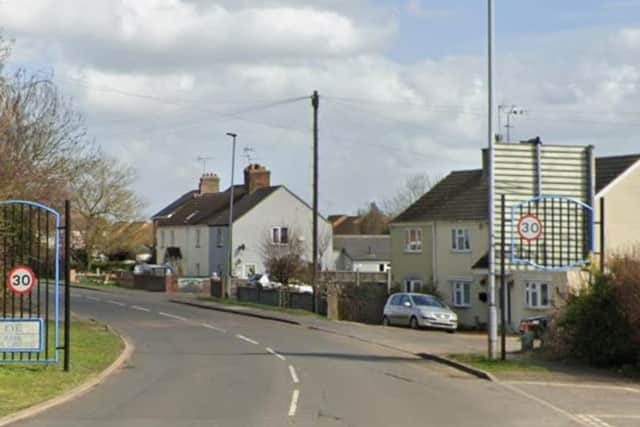
He claimed that a proposed 19-hectare employment site earmarked for land to the north of Parnwell Way, Eye, contradicted the council’s ‘green wedge’ policy, which refers to designated areas of undeveloped land that prevent urban sprawl and the merging of settlements.
“We’ve got this horrendous situation with the traffic coming down Eyebury Road to avoid the A1139, people trying to drop their kids off at the primary school, and there’s all this extra traffic trying to get down there.”
Speaking to the Local Democracy Reporting Service, he said: “The green wedge policy says that you don’t build on green wedges. They’ve got a policy, yet they’re proposing to build on it. So why are council officers going against their own policy?”
Mr McKean also raised concerns over the site being within a flood zone and argued that it would prevent any extension of the A1139, which he claimed would ease congestion leading back to the A47 Trunk Road and village.
He said: “We’ve got this horrendous situation with the traffic coming down Eyebury Road to avoid the A1139, people trying to drop their kids off at the primary school, and there’s all this extra traffic trying to get down there.”
Another issue Mr McKean raised about the Draft Local Plan was a proposal for a 15-metre high industrial development in close proximity to Grade II* Listed Oxney Grange, which he claimed would have a significant visual and noise impact on the historic building as well as the nearby residents.
There are also plans for 10 houses near the Grade II Listed Blue Boar pub in Eye and plans for 100 houses on land east of Crowland Road, adjacent to a Grade II* Listed farm house.
“It is surrounded by flood zones so it can’t have any more growth"
Mr McKean fears that the village’s infrastructure will not be able to cope with its current rate of growth. He claims the medical centre is too small, the primary school is full and traffic is already an issue.
“The village has been sustainable for years so it doesn’t need any more growth. It is surrounded by flood zones so it can’t have any more growth.
“It’s got a protective green wedge policy but they’re going against it and want to put an industrial site on there. That, as a consequence, will impact resolving the rat run issue through the village and past our primary school,” he said.
“It’s essential we all work together to plan for our future generations"
Peterborough City Council’s cabinet is recommended to approve the draft plan once a scrutiny committee has reviewed it on March 20. This will allow the draft plan to move to public consultation in April.
Councillor Nick Thulbourn, cabinet member for growth and regeneration at the council, said: “We understand proposals for growth can be challenging for communities and must be carried out in a planned way, which means making sure space for homes and businesses is allocated proportionally.
“It’s essential we all work together to plan for our future generations, providing space for our young people to live and work, raise families of their own and contribute to the economic growth and regeneration of Peterborough.
“Engaging with our residents, businesses and other groups for their feedback is a very important step in creating a new Local Plan, which will determine how our city looks and grows for the next 20 years.”
Peterborough’s Draft Local Plan makes provision for approximately 22,180 additional dwellings between 2024 and 2044, which allows for a 10 per cent buffer on the target set by the government.
A total of 69 per cent of the houses are planned for the city centre and urban extensions, while six per cent are earmarked for surrounding villages. The remaining percentages include new settlements and windfall.
It is hoped that the plan will be adopted by the council in December 2026.