
WATCH: Former Peterborough Mayor's harrowing memories of atomic bomb tests - as plaque placed in city's Central Park to remember sacrifices made by thousands
Plaque placed in park’s Sunken Garden with other military memorials
A former Mayor of Peterborough who took part in Britain’s atomic testing programme during the 1950s and ‘60s has spoken of his pride after a memorial stone to mark the sacrifices he and thousands of his comrades were put through was placed in a city park.
Cllr Alan Dowson served with the RAF on Christmas Island (also known as Kiritimati) as a 19-year-old in 1958, witnessing atomic bombs being detonated – and suffering the terrible consequences ever since.
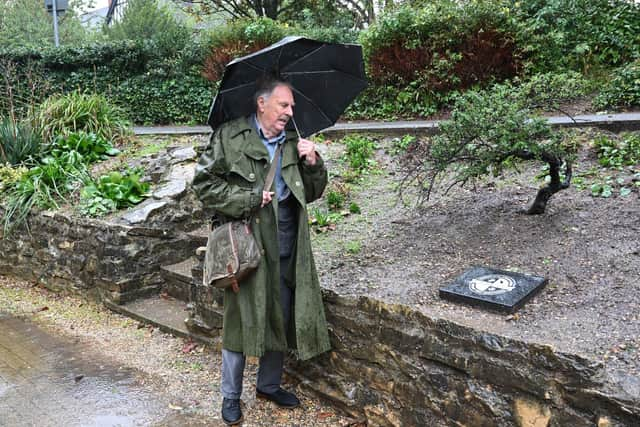
Now, more than 60 years after Cllr Dowson and 22,000 other young men witnessed the shocking sight of some of the most destructive weapons being tested – and suffered the medical effects of the explosions – a plaque to honour the ‘LABRATS’ has been placed in the Garden of Peace at Central Park.

Earlier this year cllr Dowson helped organise a reception at Peterborough Town Hall for his fellow veterans – after they all received a special medal in second class post.
Peterborough City Council has been the only authority to recognise the veterans of the bomb testing in this way.
The Peterborough Telegraph met with cllr Dowson on a rainy day at Central Park – where he said it was ‘humbling’ to see the plaque.
He said: “I am extremely pleased and humbled by what Peterborough City Council have been doing over the past 18 months.
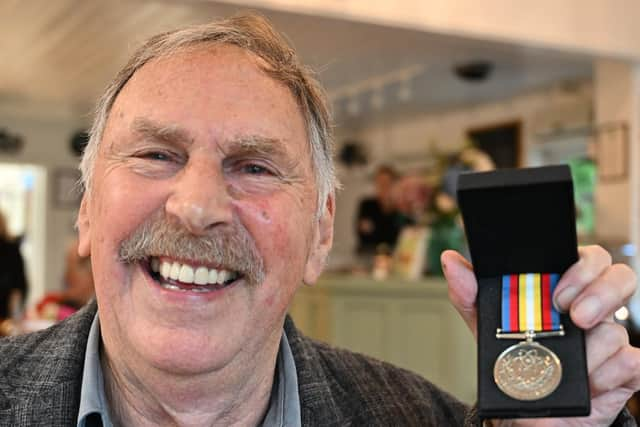
“They have been doing something to commemorate nuclear veterans, which no other council in the land is doing. It is giving recognition to the young men who served this country in the 50s and 60s.
"It is quite important – there are not many servicemen left – 13 or 14 in the East Anglian Region – and to get some recognition after 65 years is humbling. This all stems from us receiving a medal after 65 years in second class post.
"I felt as a past mayor that those people and their families should be acknowledged rather than getting their medals through the post. Peterborough was the only council that celebrated that medal with a reception. It has been recognised in Parliament, for what the council did.
"I feel very proud to participate in the opening of the plaque.”
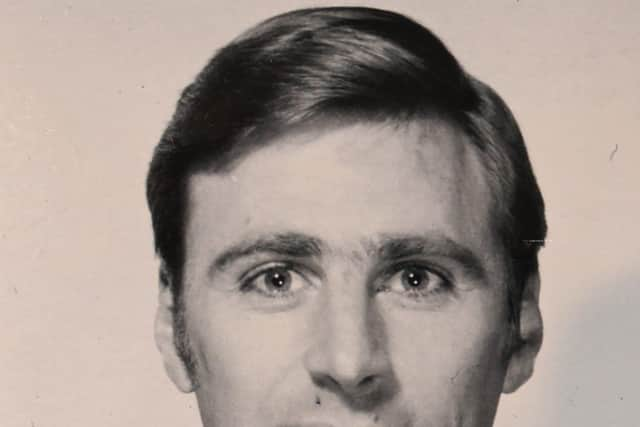
Cllr Dowson still has strong memories of the moment when he witnessed the bombs going off – remembering harrowing details.
“It was the late 1950s, we were still doing national service. Every young man aged 18 got calling up papers, you had no discretion to say yes or no. I was 18, and called up to the RAF, you were told to go abroad – I didn’t know what Christmas Island was, what it meant. We were allocated 10 months service.
"I was part of Operation Grapple – we saw two hydrogen bombs and two atomic bombs. We were taken to the beach on the island, told to wear our long khaki trousers rather than shorts, not flip flops and a shirt with your sleeves down. We sat on the beach with our back to the blast . You felt the heat on your back – you had no covering, you had your hands in front of you so you saw the bones in your hand. Then you could stand up and look at the glowing hydrogen bomb – dropping out of the sky was all the birds. If you watched it go off, you would go blind.
"There has been no recognition for us. We haven’t been given compensation. The French, Americans, New Zealanders, Australians, even Fijians have been given compensation. But the 22,000 men were given nothing.
"Most of us could not have children.”
The plaque will officially be unveiled at a ceremony on Saturday (October 12)