
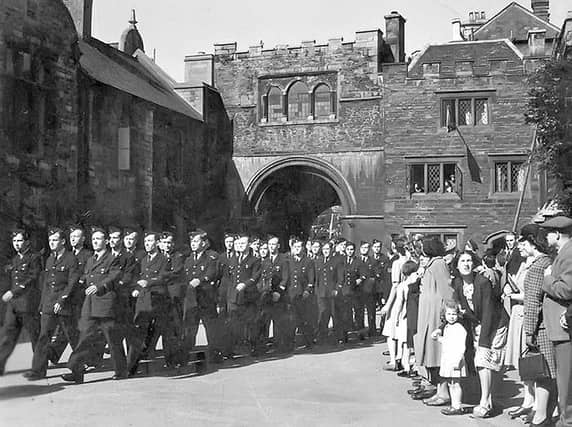

“We shall defend our island, whatever the cost may be,” Prime Minister Winston Churchill stated in his now immortal 1940 speech.
“We shall fight on the beaches, we shall fight on the landing grounds, we shall fight in the fields and in the streets, we shall fight in the hills; we shall never surrender.”
The Second World War brought conflict – and the very real threat of invasion – to all corners of Britain. Fear of the Nazi war machine and its merciless Luftwaffe air force appearing at any time was uppermost in the minds of Britons everywhere from September 1939 until the latter years of the war.
Of course, Peterborians faced their own fair share of fear, hardship and conflict. Local men went off to fight, with no guarantee of returning home, while those who stayed home faced the threat of German bombs raining down from the sky.
Air raid shelters were a common sight and sandbagged walls stood sentry outside many of the city’s key buildings. Anti-aircraft guns popped up in city parks and premises of all kinds were requisitioned for military purposes. Put bluntly, it was a scary and extremely uncertain time.
As scared as they were however, Peterboroians – like the country as a whole – did not cower or concede. Imbued with ‘Blitz spirit’ and drunk on Churchillian rhetoric, the indefatigable peoples of our island took everything Hitler could throw at them and stood firm.
As the war progressed, Peterborough welcomed people from far and wide: Allied troops from France and the United States, as well as refugees fleeing European states overrun by the Nazis.
Even German and Italian prisoners of war enjoyed the honour of calling our fine city ‘home’ for an extended period of time.
After six long years of fearful conflict, the Nazi threat was finally extinguished on May 8, 1945 – Victory in Europe (VE) Day. Parades and street parties filled the city streets as tearful families took stock, gave thanks and looked forward to the promise of a peaceful future.
Eight decades have passed since those dark, tumultuous days, and much has changed. While some might argue that that change has been for the better, others may take a contrary view. Whatever your stance on that may be, one thing cannot be doubted: we enjoy the liberties we take for granted today –including the freedom of speech – because we are a free people. And we are free because, along with countless others, the people in these wonderful photos stood up to be counted when it counted most.
Take a look at the next 14 vintage photos and see how Peterborians stood up to Hitler during the Second World War:
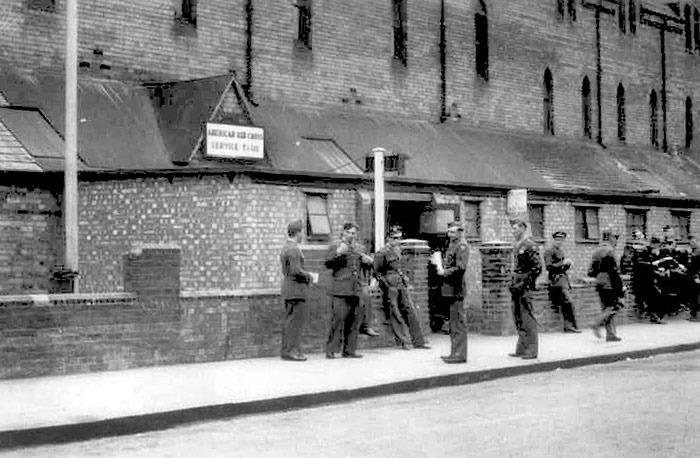
5. American Red Cross Club
The American Red Cross Club – which was the commandeered St Peters Training College on City Road – pictured during wartime. Photo: Peterborough Images Archive
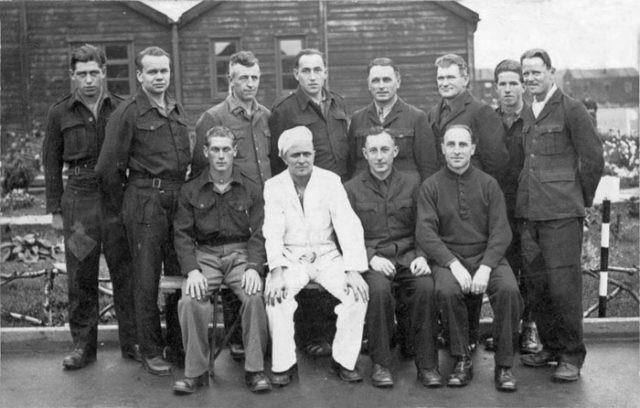
6. Yaxley Prisoner of War Camp
A picture postcard from Prisoner of War Camp #279, a Second World War working camp for German Prisoners of War (POWs)who worked as labourers in the local area. During the days immediately following the Dunkirk Evacuation in 1940, the camp was in Allied use and was very busy as a base for the 401/219 Company, Royal Engineers amongst others. As the war progressed, the camp was modified to hold German POWs (although records also show it also housed Poles, Ukrainians, Yugoslavs, Italians, one Russian and even a small number of British subjects). The camp buildings have long since been removed but the extensive concrete foundations can still be seen today on the opposite side of the A15 to the Ferndale estate. Photo: Peterborough Images Archive
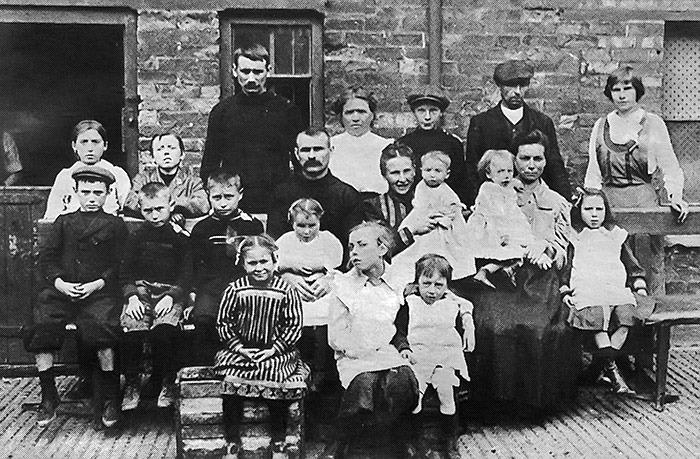
7. Belgian Refugees (circa.1943)
Several hundred Belgian refugees were homed in Peterborough during the Second World War after Nazi Germany invaded their country. It is highly likely that some of their descendants remain in the city today. Photo: Peterborough Images Archive
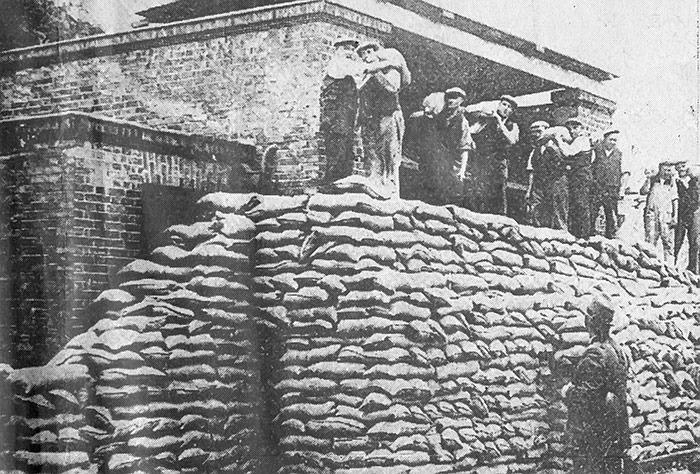
8. Peterborough District Hospital (early 1940s)
The operating theatre at Peterborough District Hospital being sandbagged for wartime protection during the early 1940s. Photo: Peterborough Images Archive