
Stroke patients in Peterborough among first to benefit from new genetic test

Stroke patients in Peterborough are to be among the first to benefit from a new rapid genetic test.
The test uses a cheek swab to identify in about 70 minutes whether patients are likely to respond to the standard NHS treatment for preventing recurrent stroke.
The new test will be carried at the North West Anglia NHS Foundation Trust, which runs Peterborough City Hospital, Hinchingbrooke Hospital and Stamford and Rutland Hospital.
Currently, more than one in four patients carry genetic variants reducing the effectiveness of standard treatment, meaning they leave hospital with a prescription that may not protect them against another stroke.
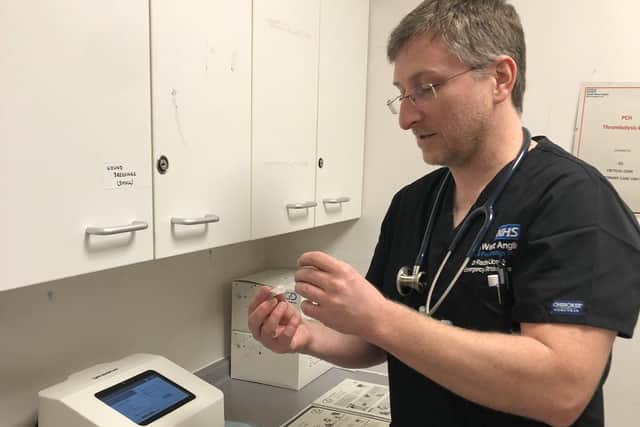

The test allows doctors to identify those patients and switch them immediately to an alternative treatment while they are still in hospital.
Professor Radim Licenik, Consultant Stroke Physician, said: “The risk of recurrent stroke is highest immediately after the first event, so making the right treatment decision quickly is critical.
“This new test has changed the way we approach making treatment decisions and is an important step towards more personalised stroke care.
"It allows us to make informed prescribing decisions at the bedside and is already improving outcomes for patients.”
Peterborough City Hospital provides care to approximately 900 stroke patients each year.
Stroke patient Alina said : “The results showed that my body responds differently from most people, so I required an alternative treatment.
"This experience showed me how important testing is for stroke patients.
"It allowed the doctors to tailor therapy to my genetic profile, ensuring I am receiving the medication most likely to work for me.”
Dr Gino Miele, chief executive of diagnostics company genedrive, which has developed the test, said: “This is an important example of how genetic testing can support more personalised, preventative healthcare within the NHS.
“By preventing avoidable readmissions, we can play an important role in reducing the impact of secondary stroke on the NHS.”