
Mum's appeal to help Peterborough charity's search for treatment for glue ear

A Peterborough-based charity’s campaign to find a treatment for glue ear which afflicts many children has been given a boost.
The Royal National Institute for the Deaf, based in Bakewell Road, Orton Southgate, has championed vital research into non surgical treatments for the so-called glue ear, which is caused by a build of trapped fluid.
The affliction can cause pain for young sufferers, particularly when lying down to sleep, and making hearing difficulties and cause problems for youngsters as they learn to speak.
Now the charity’s work has been given a lift by a mother whose daughter was born with glue ear.
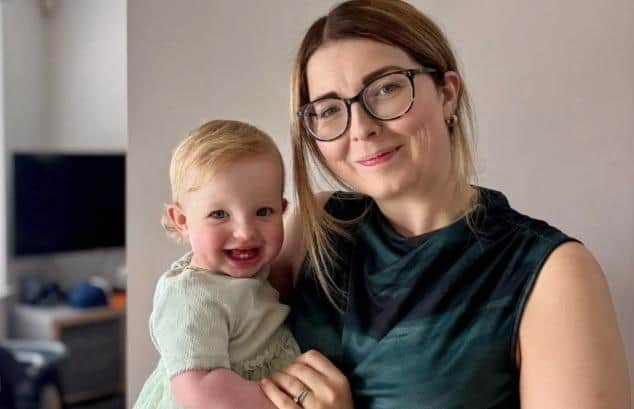

Louise Patterson, whose daughter Lilly has ben diagnosed with glue ear, has launched a Gofundpage to help the charity’s work.
Mrs Patterson said: “We’re hoping that any money raised will help the RNID find non surgical treatments for glue ear so other parents and their children don’t have to suffer in the way we have.”
She said: “Lilly was never great at sleeping because there was a lot of pain in her ears, especially when she was lying down.
"There were a number of signs that that concerned me, for instance she didn’t turn when we said her name.
"It wasn’t until she was eight months old that we were told she had glue ear.
She was given hearing aids which made a difference but she needs constant supervision while wearing them in case she puts them in her mouth.
"Research like this into non-surgical treatments could make a huge difference for families like ours.
"Waiting lists are long and surgery is not always an option for every family, so any new way to potentially help children with glue ear is incredibly important.”
An RNID spokesperson said: “For families like Louise and Lilly’s, better understanding of why glue ear develops could eventually lead to treatments that reduce the need for surgery and help children receive support earlier.
“While there is still much to learn, RNID-funded researchers are building the knowledge needed to transform glue ear treatment.
"This could mean fewer invasive treatments, faster access to effective support and better outcomes for children and families in the future.”