
Council agrees to fight plans to build new solar farm near Peterborough due to impact on aircraft
Concerns have been raised about the impact a proposed new solar farm could have on aircraft.
Huntingdonshire District Council has said it will oppose the plans to build the Haddon Road Solar Park due to the potential impact of “glint and glare” from the solar panels on aircraft.
A final decision on whether the solar park can be built will be made by a planning inspector after the developer launched an appeal due to the district council not making a decision in time.
The Haddon Road Solar Park could see 40,000 solar panels installed over farmland near Haddon.
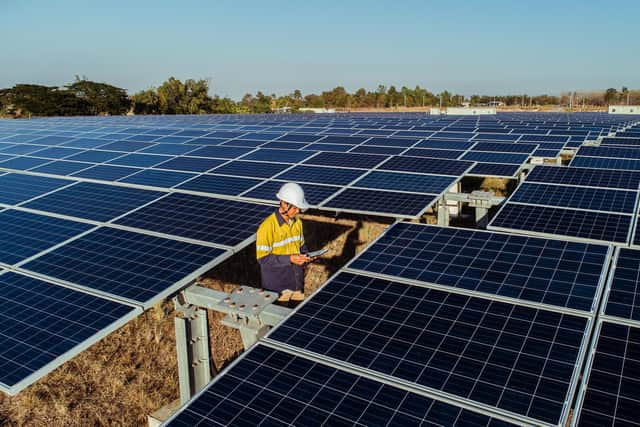

The company behind the project, Wessex Solar Energy (WSE), said the solar farm would be able to export up to 25 megawatts, providing energy for up to 7,600 households a year.
The district council previously refused to grant permission for a larger solar farm of 65,000 solar panels to be built at the site.
A planning inspector later upheld that decision at an appeal, concluding that the development would cause “significant harm” to the area.
WSE has said its latest proposals for a smaller solar farm addressed the concerns raised about the previous project.
The company said: “The Haddon Road Solar Park would make a significant contribution to the fight against the emission of greenhouse gases through the provision of clean, renewable energy providing on average 7,600 homes with electricity.
“It is considered that there is a clear policy commitment at all levels of government to combatting the emission of greenhouse gases that lead to climate change.
“This is a significant material consideration that favours the Haddon Road Solar Park being awarded planning consent.”
WSE said it accepted the proposed solar farm would have some impact on the area, but said measures are proposed to minimise this.
The plans said: “The proposed solar park would not lead to unacceptable impacts that would be in any way significant in environmental assessment terms.
“[A landscape and visual appraisal report] noted that there would be a temporary loss of farmland that could continue to be used as pasture once the physical construction works had been completed.
“Existing field boundaries are proposed to be strengthened through additional planting.
“All existing hedgerows will be managed at a height of 3.5m to help mitigate views into the site.”
The company added that the solar farm would only be in place for a temporary period of time, stating that the economic lifespan of a solar park is expected to be around 40 years.
WSE also said solar farms are “easily and quickly decommissioned and any visual impact is totally reversible”
However, concerns were raised about the potential impact of the solar farm on the Sibson Aerodrome.
Planning officers at the district council argued the application had not shown the development would not “materially harm the safe functioning” of the aerodrome, or other private flying strips, due to glint and glare, and the loss of land needed for potential emergency landings.
Councillors agreed at a development management committee meeting this week (August 18) that the authority should oppose the solar farm development at the appeal due to the potential impact on aircraft.
However, the meeting also heard wider concerns about the development, including the impact on the landscape and flood risk.
Ian Ross, chair of Elton Parish Council, said the parish council agreed with the concerns about the impact on aircraft, but said they believed there were still other issues.
He argued that installing “tens-of-thousands of stark black solar panels” would impact on the landscape of the area.
He said: “It is disappointing, and somewhat surprising, that the case officer still dismisses the harm to the landscape character, while the planning inspector’s reasons said significant harm would be caused to the character and appearance of the area, and considered this to be a matter which attracted significant weight.”
Councillor Tim Alban also raised concerns about the impact on the landscape, arguing the solar farm would “dominate” the area.
Councillor Simon Bywater said he “fully supported” the transition to renewable energy, but said this had to be done in a way that “respects the landscape, protects rural communities, and follows proper planning principles”, which he claimed the current proposals did not.
Brett Walsh told the meeting that he had concerns about the reliability of the flood risk assessment undertaken, claiming it used “outdated data” and argued the solar farm presented “an unacceptable risk of increased flooding to the A605 and neighbouring land”.
Mr Walsh said he was also concerned about the loss of farmland, which he said was “productive land worked since the Iron Age”.
He argued that losing this farmland would “weaken” the country’s food security.
Planning officers recognised the inspector who dismissed the last appeal raised concerns about impact on the landscape, but said they had particularly focused on the harm in a certain area, which they said had been removed from this application by the proposed solar farm being made smaller.
They highlighted that the farmland included in the project was not considered best and most versatile.
They also pointed out that no concerns about flooding had been raised by Cambridgeshire County Council as the lead local flood authority.
Officers explained that because of this it would be hard for the district council to oppose the development for those reasons at appeal.
However, they said councillors and members of the public could submit their own representations to the appeal raising these concerns for the planning inspector to consider.
Councillor Jon Neish said he agreed the district council should oppose the development at the appeal on the grounds of the potential impact to aircraft, but said other areas were still of concern to him.
In particular he highlighted that he still had concerns around highway impact, flooding, the impact on countryside views, and the loss of agricultural land.
Councillor Eric Butler said it was up to them as individuals to make representations to the inspector raising these additional concerns, adding that he shared concerns about the risk of flooding and the harm to the landscape.
The committee voted unanimously to back the recommendation to oppose the solar farm development at the appeal.