

As someone who has captured so many key moments in Peterborough’s history over the past five decades, PT photographer David Lowndes is a well-known face around the city.
Indeed, so well known is “Lowndesy” that many people who’ve been acquainted with him for a while may feel they know the esteemed snapper, inside out.
However, while the world and his wife has a fair idea of how David spends his days, they have no idea what the 70-year-old legend gets up to at night.
The truth is, you’ll often find Lowndesy up and about in the wee early hours, bright-eyed and bushy-tailed, as that is when he gets to indulge his true life’s passion: astrophotography.
"I’ve always been interested in astronomy since I was a kid,” he explains.
“Someone bought me a book by Patrick Moore [famed astronomer and presenter of The Sky at Night] and that sort of fired my imagination as to what you can see ‘up there’.”
Describing astrophotography as “a natural progression”, David likes to point his telescope and camera skyward whenever the weather allows:
"If the sky is clear then I’m doing it,” he shares.
While some may consider papping the night sky to be a solitary endeavour, it is actually something of a social pursuit for our David.
"I have an ‘astro-buddy’” he says: “myself and my friend James work quite closely together.”
"We have the same equipment so we can join our pictures together to increase the quality.”
David is also a member of the Peterborough Astronomy Society which meets at Sacrewell Farm near Wansford on the first Thursday of every month.
"We have speakers on various subjects,” he says, “and there are people there who can help out if you have any problems.”
Open to people of all ages and issuing no requirements for members to have “all the right gear,” the club is a great place, David suggests, for astronomy newbies to find their feet and meet like-minded folk.
"You don’t need to have a telescope,” he notes; adding “there are quite a few people who come to the meetings who don’t have any equipment.”
So what is David’s favourite space pic among those he is sharing?
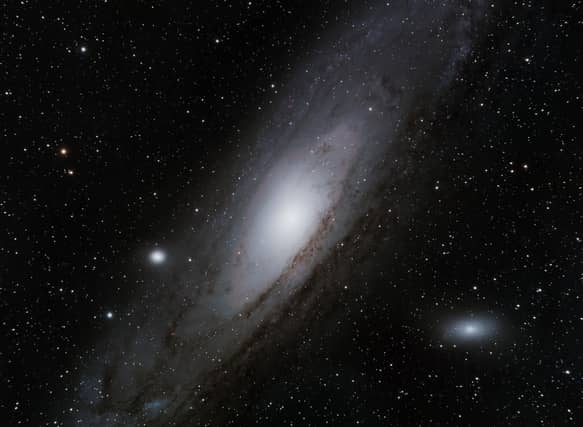
After pondering for a good long time, he finally reveals “...Andromeda.”
"If you’ve got a good set of eyes you can actually see Andromeda with the naked eye.”
Unsurprisingly, we think David’s astrophotography shots are absolutely sensational, and well worth taking time out to savour.
So why not make a brew and treat yourself to an extended browse; we’re confident you’ll think they’re out-of-this-world!
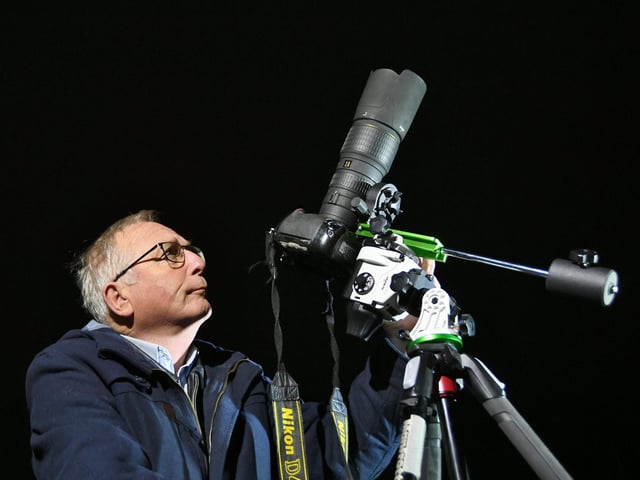
1. Part-time astrophotographer / full-time legend
Legendary PT snapper and astronomy enthusiast David Lowndes likes to get out and enjoy the night sky whenever he can. Photo: David Lowndes
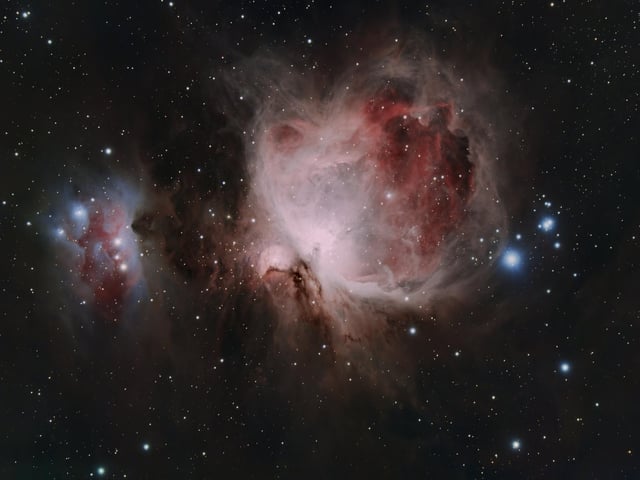
2. Orion Nebula
Blazing brightly in the constellation of Orion, M42 has been known to many different cultures throughout human history. Indeed, the Maya of Mesoamerica believed it to be the cosmic fire of creation. Just 1,500 light-years away, the Orion Nebula is actually the nearest large star-forming region to Earth. Its brightness and prominent location (just below Orion’s belt) ensure it can be spotted with the naked eye from a dark sky site. Photo: David Lowndes
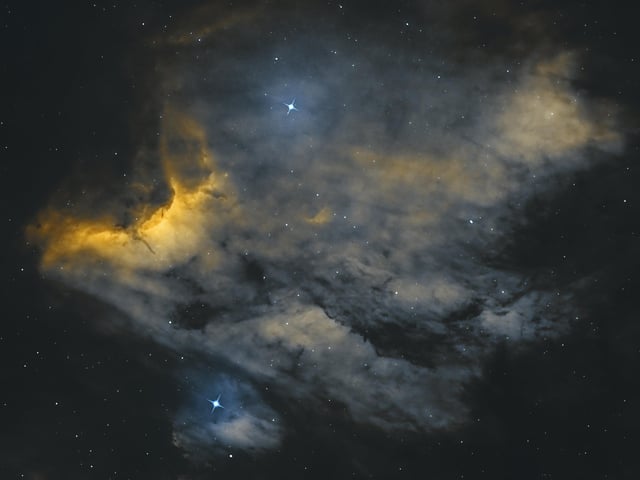
3. Pelican Nebula
Nesting around about 2,000 light years away from Earth is the Pelican Nebula (IC5070 / IC 5067), a particularly active mix of star formation and evolving gas clouds. Tilt your head and you'll see the nebula looks like a bird (a pelican), which is quite fitting as it is typically seen toward the constellation of a another bird, Cygnus (a swan). Photo: David Lowndes
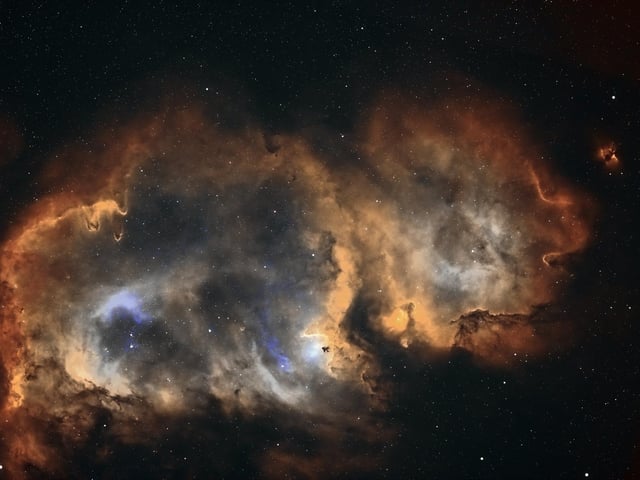
4. Soul Nebula
In this astonishing shot, David managed to capture the Soul Nebula (also known as the Embryo Nebula) in all its majestic glory. Surrounded by a cloud of dust and gas over 150 light-years across, this stunning open cluster of stars is located about 6,500 light-years from Earth within the constellation of Cassiopeia. Photo: David Lowndes