
Ministers to be warned of ‘one last chance’ for local government reorganisation
The decision about how Cambridgeshire and Peterborough will be re-organised has not been made yet
The Government has “one last chance” to get local government reorganisation right as trust in the process is on the verge of “completely evaporating”, a sector leader will warn.

There is growing concern that the review of proposals to create unitary councils across two-tier areas is focused on strengthening the Government’s position rather than reaching decisions in line with national objectives, Sean Matthews will say in his inaugural speech as chairman of the influential County Councils Network (CCN).
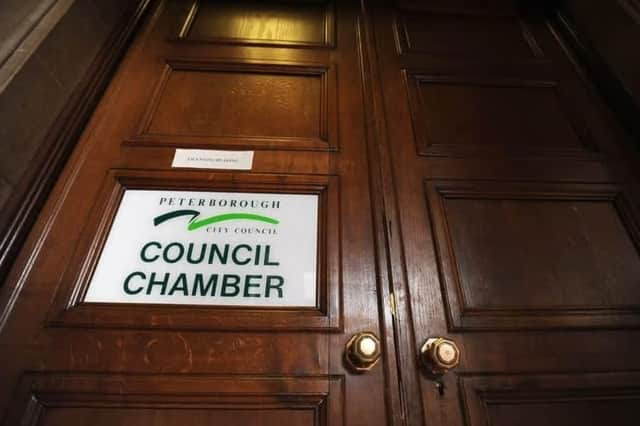
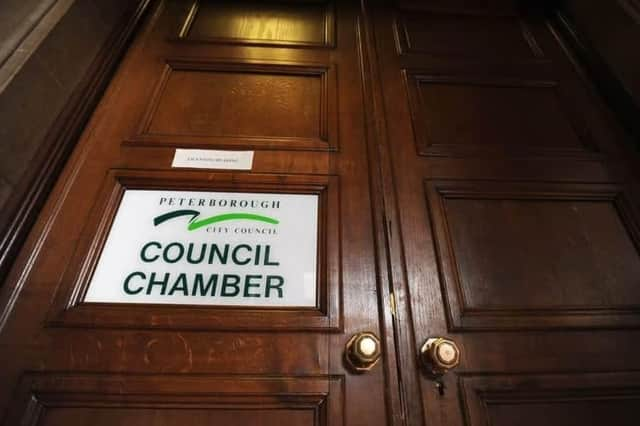
Local Government Reorganisation (LGR) will see councils across the country - including in Peterborough and Cambridgeshire - completely reshaped.
It could see the end of Peterborough City Council, with proposals to merge it with other parts of Cambridgeshire, including Fenland and Huntingdonshire.
However, months after a decision for the area was set to be made, a final outcome has still not been decided upon.
The process has been highly contentious in some areas, with at least eight councils either launching or considering legal challenges to the Government’s choice of footprints for new councils.
In October, Communities Secretary Angela Rayner withdrew decisions on plans across Derbyshire, Devon, Hertfordshire, Kent, Lancashire, Leicestershire, Lincolnshire, Nottinghamshire and Staffordshire.
Decisions made by her predecessor, Steve Reed, on areas across Essex, Hampshire, Norfolk and Suffolk are also now under review after being withdrawn in September.
The case of Cambridge and Peterborough, where a decision had not been made, is also being considered.
The Ministry of Housing, Communities and Local Government has said the review is to ensure the process is robust and aligns with the Government’s aim to “rewire the state”, and follows “updated and privileged legal advice”.
Mr Matthews, who is the Reform UK leader of Lincolnshire County Council, will tell the CCN’s annual conference in Buckinghamshire on Monday that he welcomes the review, but will question the Government’s approach.
He will say: “The Government are right to withdraw previous decisions and look again.
“But as we stand today, the recent announcement provided little reassurance that the process will be robust, fair and transparent.
“Indeed, there is growing concern that this review is less about reaching better decisions in line with the original objectives of reorganisation and more about strengthening the Government’s legal position, ending previous challenges, and avoiding the full disclosure of previous ministerial advice.
“Whether or not this is the Government’s intention, the perception is very real and potentially very damaging.
“Trust in the Government’s handling of reorganisation has already been severely damaged and for many it is on the verge of completely evaporating.”
Calling on the Government to demonstrate it is not seeking to protect its own position, Mr Matthews will challenge ministers to “genuinely” reconsider decisions “that went against the criteria and pose a significant financial, implementation and service risk”.
“The Government has one last chance to get it right,” he will say, adding decisions must be “based on evidence rather than political or legal expediency”.
Turning to devolution, Mr Matthews will argue councils must be remain “at the heart” of reforms.
He will say: “If we are serious about rewiring the state, we must get the relationships between central government, local government and our communities right.
“Devolution cannot simply mean moving power from Westminster to mayors.
“It must mean empowering and not diminishing the role of local government.”
When questioned by the Commons Housing, Communities and Local Government Committee on Wednesday, Ms Rayner defended her approach to reorganisation.
She said: “The reason I took the pause was because when I make decisions, I want to know I am making the right decisions and that means I have got to have the information.
“LGR (local government reorganisation) was always going to be contentious and it was always going to be litigated, let’s be honest.”
The Communities Secretary said the principle of councils co-operating on proposals and the Government setting criteria to deliver reorganisation “is the right thing to do”.
Responding to criticisms of Mr Reed’s approach, She added: “I think my predecessor did a really good job actually, but I wasn’t involved in the process that he took.
“I was making sure that I made a fresh decision and that is what I would distinguish, not that it is not a defence of my predecessor.”