
On the frontline at Holme Fen Fire: Why crews fear heavy rain two weeks into mission to beat the flames
After a long, hot, dry summer, you would have thought the fire crews heading into their third week tackling the blaze at the Holme Fen Nature Reserve would be doing a rain dance to help them complete their mission.
But in fact, rain is the last thing on their wish list, as the teams move into the second stage of the operation – a stage that could last another month.
The Peterborough Telegraph went to see the teams of firefighters on the front line at Holme Fen, many of whom have been in the reserve since August 8.
Assistant Chief Fire Officer Stuart Smith explained why, despite the drought and hot, dry weather Peterborough – and much of the rest of the country – has had over the summer, teams are hoping to see dry conditions remain.
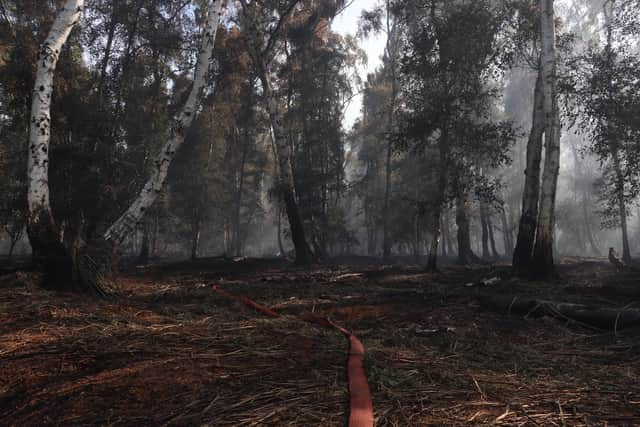

Stuart said: “When we turned up that first week we had temperatures of 36-40 degrees, so the fatigue and effort from the firefighters, who were wearing our full fire kit was incredible. That really took its toll on the firefighters.
“Taking care of their welfare is something we took very seriously during this operation.
“A sprinkling of rain isn't going to hurt - but if we get massive downpours, thunderstorms – we have one access road around the site, which is obviously peat, it will make it really challenging to access the site ourselves.
“More importantly for stage 2 of the plan, we need access into the main part of the site - the equipment coming in is 28-30 tonnes, and therefore if it becomes boggy in there, they won't be able to access the site, and we will have to re-think our plan on how we attack the rest of this fire.”
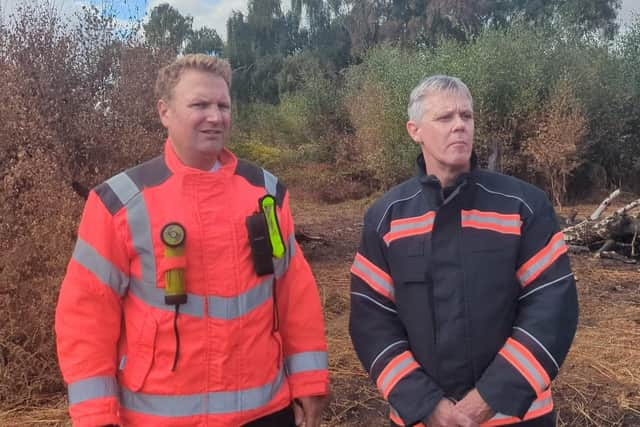
After extinguishing the ‘visible’ flames relatively quickly, the second stage of the operation has now begun – and that has seen the heavy moving equipment take centre stage to clear away the burnt trees from the site.
With countless trees falling over the past two weeks, it is a mammoth task – but a vital one, as ‘hotspots’ – peat fires, sometimes several feet underground – can be hidden by the timber. It is these hotspots the crews are fighting – but the dangerous terrain is making the task difficult.
Along with those on the front line, Stuart was full of praise for the community volunteers who have come forward in the brigade’s hour of need.
He said: “I am not sure words can acknowledge the effort the community has gone to support us. I think logistically this is a huge site, and it takes it toll on the organisation. Everybody pulls together for the front line. But the community has been phenomenal. The rapid relief team delivering food in the first week, The Admiral Wells pub and Ramsey Town Council doing crowdfunding to provide food during lunch and dinner times - it takes pressure of us. It has been invaluable.
“We have been working with the farming community for a long term in terms of rain water harvesting, making sure we can access their water should we need to. It requires them to step forward when we need them, and we are really fortunate here that we have a farming community that have offered bowsers in the early stages.”