
Longueville Court in Peterborough trials new innovative pilot scheme


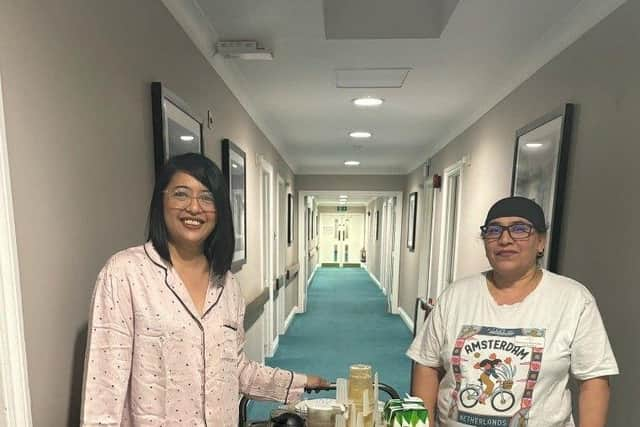
Longueville Court trialled a pilot scheme involving overnight care staff wearing their pyjamas instead of the usual uniform, in an effort to help disorientated residents who struggle to recognize whether it is night or day.
This trial would differentiate night staff from day staff, acting as a cue to remind residents that it was night.
The trial was successful, with psychological and physical benefits observed in residents. This included improved sleep at night and reduced restlessness and pacing in residents.
Staff also reported that residents’ daytime routine was improved; with increased energy, fluid and food intake and reduced mood swings.
Objectives
• To ensure the health, safety and well-being of residents and staff.
• To ensure that staff wear clothing in line with the objective of this case study.
• To enable staff to maintain a positive professional image.

• To enable easy identification and recognition of role and profession.
• To ensure that infection control and health and safety issues are addressed.
Introduction
Recognising whether it is night or day can be confusing for care home residents with dementia, particularly when care staff in the home wear the same clothes at all hours. This can cause disruptions to daily routines, with sleep deprivation, pacing at night and restlessness in residents. To enhance residents’ well-being and improve their night-time routines, night staff at Longueville Court have been wearing their pyjamas to work instead of the usual uniforms.

Findings
The residents’ initial reaction to staff in their pyjamas was positive, with smiles and chatting about their outfits. Residents felt comfortable and relaxed about the walk to their bedroom or wheelchairs to be taken to bed. Residents seemed to associate the staff being in their pyjamas with going to bed, and were a lot more forthcoming and willing to go to bed than when staff wore their usual attire.
For the more restless residents, the uniform change had a positive effect in promoting sleep at night, reducing sleep deprivation, disorientation and pacing. These were a regular occurrence for some residents previously, which resulted in lack of energy, irritability and mood swings. This would then affect their food and fluid intake the next day, due to residents feeling exhausted from lack of sleep. Longueville Court staff have reported a remarkable improvement in these areas.
One resident used to get angry at night staff when they would tell him it is night, but is happier now when staff point out that they all are dressed for bed. Another resident used to be restless and pace in the early hours, but now sees staff in their pyjamas and says “Sorry – is it night, have I woken you? I’ll go back to bed.” One resident who has delirium and gets disorientated with time asked upon seeing the staff in their pyjamas, “Is it really bedtime?” Staff confirmed this and prompted the resident to sleep.
Overall there is a more relaxed atmosphere, with residents happy and settled with their hot drinks before bed. Importantly, residents now recognise night staff as soon as they come in to work, and begin their night time routines. Residents and staff have said that there is as feeling of “being comfortable and at home” and that it has improved staff/resident relationships.
The removal of uniforms does not change cultures of care, but it represents an important symbol of making the care home a “home” and improving residents’ wellbeing.