
World premieres and a recently discovered play: Groundbreaking music and theatre debut at the 2025 Cambridge Festival
The 2025 Cambridge Festival (19 March – 4 April) is set to captivate audiences with an extraordinary lineup of exhibitions and performances that bring groundbreaking research into the spotlight.
From exploring the effects of climate change to showcasing rare historical and political manuscripts, this year’s festival is redefining how we connect with science, art, and history.
Performance, whether spoken word, theatre, or music, have always been a big part of the Cambridge Festival. Being performed for the first time, a recently discovered play written in the 1950s by a student at the Cavendish Laboratory, Not for a Cat: A Play for the Nuclear Age (5 April), explores the dangers and fears of nuclear power, international intrigue, and a pet gone awry. Gripping, brilliantly written and funny, the play is sure to leave you thinking. The performance will also be followed by a short discussion by leading Cambridge academics on the history and science behind the play.
For music lovers, enjoy performances focusing on healing and human rights, sounds of the earth, Messiaen’s 'Quartet for the End of Time', climate change, and the Festival Evensong. Highlights include:

Music, Healing and Human Rights (14 March): As part of a larger project, curated by Elizabeth Carmack, on the theme of music, healing and human rights, this performance by St Catharine’s College Choir features premieres of works by three of the UK's most distinguished composers: Errollyn Wallen (Mistress of the King's Music), Richard Causton and Howard Skempton. The commissions address diverse issues including intersectionality and systemic prejudice, loss of freedom of speech in failing democracies and LGBTQ rights, and will be premiered alongside other works by the same composers.
Beyond Rainbows: Messiaen's Quartet for the End of Time (23 March): This concert presents Messiaen’s extraordinary 'Quartet for the End of Time': it's a work that contemplates an apocalyptic vision of earth, sea and sky utterly recast, a radical transformation of our entire world, at once terrifying and inspiring. Composed in a WWII POW camp, the music acquires new and urgent layers of meaning as we confront existential environmental changes in our own time.
Sounds of the Earth — Volcanoes, Whales, and A Dying Seismometer (6 April): Sound artist and composer David Stalling will present a concert using sounds made entirely from audifications of seismic data in an immersive listening setting: the sounds of a recent volcanic eruption near Grindavik as evidenced by a dying seismometer; sounds of the North Atlantic seafloor excited by currents, tidal motion and weather pattern; calls of whales and the hum of ships and other human-operated machines.
The Music & Poetry of Queen Idia the Musical - A Work in Progress Sharing (4 April): Experience the creative evolution of Queen Idia the Musical in this exclusive work-in-progress event. Following a research workshop supported by University of Cambridge Public Engagement in collaboration with the Royal Commonwealth Society collection at Cambridge University Library, the Cambridge Centre of African Studies, and the Museum of Archaeology and Anthropology, this sharing event showcases the vibrant fusion of spoken word poetry and Afrobeats.
The exhibitions offering at the festival this year covers everything from the relationship between animals and humans, papers from some of Britain’s biggest political names, and the relationships between Fibromyalgia pain and wearing choices.
There is a rare opportunity to go behind the scenes of the Churchill Archives Centre in their open day on 22 March. The centre, which is not usually open to the public, is home to over 600 collections on the history of modern Britain. The Archives Centre looks after the papers of politicians, civil servants, social scientists, campaigners, journalists, military leaders, and scientists. Meet some of the conservators looking after these objects and try out some of the techniques yourself.
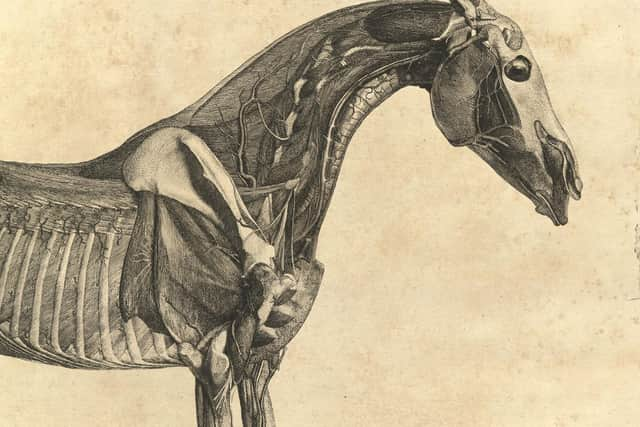
Step inside the Old Library at St John’s College for an exhibition looking at the relationship between animal and man. ‘The Peculiarities of the Animal’: An Old Library’s Catalogue of Beasts (29 March) will showcase some of the college’s unique manuscripts including a recently acquired first edition of George Stubbs’s The Anatomy of the Horse, a sheep brand formerly owned by the 19th-century polymath Samuel Butler and animal-related items (an elk's hoof; a goat's blood; an embalmed skink) from a 17th-century materia medica cabinet.
An exhibition from Anglia Ruskin University explores the relationships between chronic pain, clothes wearing choices and artistic expression, drawing upon the lived experience of those with the condition. Conceptual objects worn on the body alongside creative collages and textures, express initial considerations of chronic pain and resilience with the body. The relationships between Fibromyalgia pain, wearing choices and creative practice (22 March) emerged as a collaboration between ARU fashion and textile artist Dr Wendy Moody and ARU Neuroscientist Professor Jane Aspell, head of the Self and Body Lab. There are several films showing during the festival including:
Anxiety to action – the start of our journey to a flourishing world (Premiere, 26 March): Two short films, shown for the first time, followed by a panel discussion chaired by BBC presenter Tom Heap of ‘Rare Earth’ and ‘Countryfile’. ‘Climate Anxiety’ and ‘Bats, Bottles & Butterflies’ are short films made by Cambridge Moviemakers. They explore young people’s worries about climate change, what local schools are doing to address the environmental crisis, and how action is an antidote to anxiety.
Voice Notes from Palestine + Panel Q&A (24 March): Join us for the screening of the powerful 10-minute documentary “Voice Notes from Palestine”, where Action on Armed Violence presents the testimonies of students with disabilities at the Islamic University of Gaza. Through their voices, the film explores the immense hardships the students endure as a result of Israel's ongoing bombardment. Associate Producer, Dr Ibat Shuayb said, “This documentary captures the daily struggles, life-threatening conditions, and unsafe environments that students with disabilities in Gaza have endured over the past 15 months due to the continuous Israeli bombardment of their neighbourhoods, universities, residential buildings, and even displacement areas where these students sought refuge”. Reproductive Justice in a Changing Climate: screening of The Climate Baby Dilemma (24 March): Over the course of three years, THE CLIMATE BABY DILEMMA (2022) follows prominent science writer Britt Wray, as she delves further into this complex issue - hosting workshops, giving talks, and speaking to activists, psychologists, parents and prospective parents. The film also meets many youth at the centre of the climate moment.